
Diabetes & Eye Health: What Those Floaters, Blurred Vision & Dark Spots Could Mean
When you think about diabetes, blood sugar, diet and medication may come to mind first. Your eyesight may not. But diabetes can gradually affect the tiny blood vessels that supply the retina, the light-sensitive tissue at the back of the eye. The diabetes & eye-health changes can begin quietly, sometimes before you notice anything unusual. Later, you may see blurred vision, floaters, dark spots or changes in your sight.
The good news is that diabetes-related eye disease can often be detected early, and timely treatment can help protect your vision.
How Diabetes Can Damage the Eye
Persistently high blood glucose can weaken the small blood vessels in the retina. Over time, these vessels may leak fluid, become blocked or develop fragile abnormal blood vessels. This damage is known as diabetic retinopathy.
Blood sugar is not the only factor that matters. Blood pressure and cholesterol can also influence the development and progression of diabetes-related retinal disease. Managing these factors alongside your diabetes care can help reduce the risk of eye complications. The important thing to remember is that the effect of diabetes on the eyes is not always obvious. Early diabetic retinopathy may cause no noticeable symptoms, even while changes are developing inside the eye.
What Floaters, Dark Spots and Blurred Vision Can Mean
A few occasional floaters can be a normal part of changes in the eye’s vitreous gel. However, a sudden increase in floaters particularly in someone with diabetes requires medical attention. As diabetic retinopathy becomes more advanced, abnormal blood vessels can become fragile and bleed into the vitreous. This may appear as dark spots, streaks, shadows or cobweb-like floaters. This is why diabetes eye floaters should not simply be dismissed when they appear suddenly or become much more noticeable.
Blurred vision can also have several causes. Fluctuating blood glucose can temporarily affect the eye’s focusing ability. Persistent blurred or distorted vision, however, may be associated with diabetic retinopathy or diabetic macular edema, where fluid accumulates in the macula and affects central vision. If you notice a sudden change, an eye examination can determine whether it is a temporary visual change or something requiring treatment.
The Eye Problems Diabetes Can Trigger or Worsen
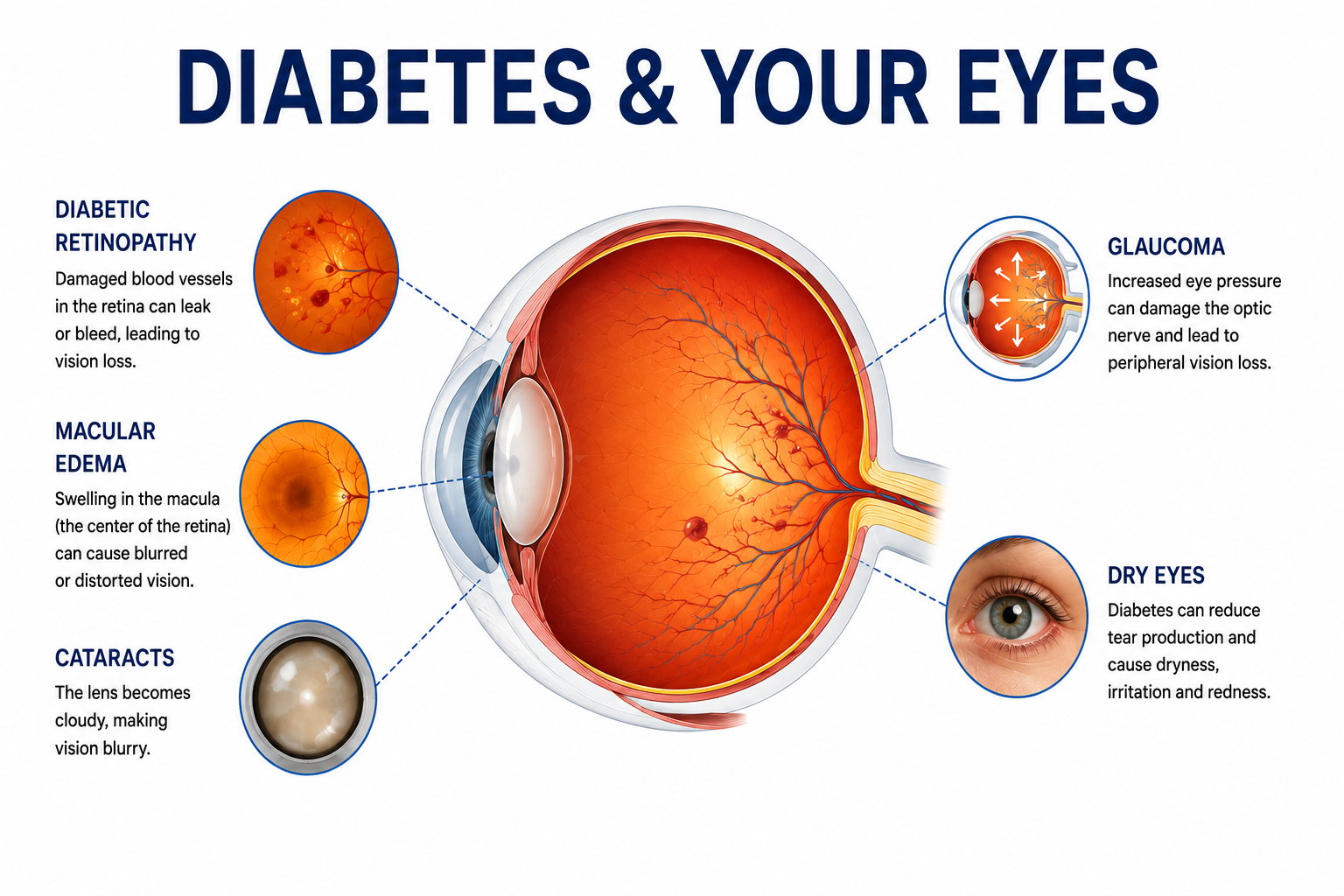
Diabetic retinopathy is the most closely associated retinal complication, but diabetes can affect eye health in several ways. Diabetic retinopathy damages the retinal blood vessels. In more advanced stages, leakage, bleeding and abnormal blood-vessel growth can threaten vision.
Diabetic macular edema occurs when fluid leaks into the macula, the central part of the retina responsible for detailed vision. It can cause blurred or distorted central sight.
People with diabetes can also develop cataracts, in which the eye’s natural lens becomes cloudy. Cataracts may occur at a younger age in people with diabetes.
Diabetes is also associated with an increased risk of glaucoma, a group of conditions that can damage the optic nerve. Glaucoma can develop without obvious symptoms, which makes regular eye examinations particularly important.
Dry or uncomfortable eyes may also occur in people with diabetes. However, symptoms such as dry eyes, itchy eyes, eye twitching, eye pain or headache do not by themselves indicate diabetic retinopathy. A clinical examination is needed to identify the underlying cause.
Why a Diabetic Eye Test Matters Even When You See Clearly
One of the biggest misconceptions about diabetes and eyes is that normal vision means there is nothing to worry about. Early diabetes-related eye disease may have no obvious symptoms. By the time vision becomes noticeably affected, retinal damage may already have progressed.
A diabetic eye screening examination allows an ophthalmologist to look for changes before they significantly affect sight. Depending on your individual situation, an eye examination may include a dilated retinal examination, retinal photography, OCT imaging and other tests when clinically indicated. For people with diabetes, an eye test is therefore about more than checking whether you need glasses. It is about examining the health of the retina and identifying problems early. The recommended screening schedule depends on the type of diabetes, how long you have had it, your retinal findings and other risk factors. Your ophthalmologist can advise how frequently you need follow-up.
What Happens If a Problem Is Found?
Not every abnormal finding requires immediate treatment. Some early retinal changes may simply need closer monitoring alongside good management of blood glucose, blood pressure and cholesterol. When diabetic retinopathy or diabetic macular edema threatens vision, treatment may include anti-VEGF eye injections for diabetes, laser treatment or, in selected advanced cases, surgery such as vitrectomy. The treatment depends on what is happening inside the eye and how advanced the disease is. This is why an accurate retinal assessment is important before deciding what treatment is appropriate.
When a Change in Vision Needs Urgent Attention
Some symptoms should never be ignored but seek immediate eye care if you develop:
- A sudden increase in floaters
- Flashes of light
- New dark spots or shadows
- A curtain-like shadow across your vision
- Sudden or significant blurred vision
- Sudden loss of vision
These symptoms can be associated with bleeding inside the eye, retinal tears, retinal detachment or other conditions requiring urgent assessment. You do not need to wait for pain. Some serious retinal problems can occur without significant eye pain.
Protecting Your Vision Starts Before Symptoms
Managing diabetes is also part of protecting your eyes. Keep your blood glucose, blood pressure and cholesterol within the targets recommended by your healthcare team. Stay physically active, follow a balanced diet, avoid smoking and take prescribed medication consistently. Most importantly, keep up with your recommended diabetes eye test and screening appointments even when your vision seems completely normal. Early detection gives your ophthalmologist the opportunity to monitor changes and, when necessary, treat them before they cause more significant vision loss.
Diabetes Eye Care in Dubai
If you are searching for an eye test near me in Dubai and have diabetes, a comprehensive eye examination can help assess the health of your retina and identify diabetes-related changes that may not yet be affecting your vision. At Vasan Eye & Multispeciality DSC, Dubai, our ophthalmology team provides comprehensive eye examinations, retina screening and specialist evaluation for retinal conditions, including diabetes-related eye disease. If you are looking for an eye specialist in Dubai, an ophthalmologist in Dubai or an eye clinic in Karama, Vasan eye can be one of the best standard choice.
Frequently Asked Questions
1. Can diabetes cause eye floaters?
Diabetes can be associated with floaters, particularly when fragile abnormal retinal blood vessels bleed into the vitreous. A sudden increase in floaters should be assessed promptly.
2. Can diabetes cause bleeding in the eye?
Advanced diabetic retinopathy can cause abnormal blood vessels to bleed into the vitreous. This can produce dark spots, shadows, streaks or numerous new floaters.
3. Can diabetic eye problems be treated?
Yes. Depending on the condition and severity, treatment may include monitoring, anti-VEGF injections, laser treatment or surgery. Early detection and appropriate treatment can help protect vision.
4. How often should diabetic patients have an eye test?
There is no single schedule for everyone. Screening frequency depends on factors such as the type and duration of diabetes, retinal findings and individual risk. Your ophthalmologist can recommend the appropriate follow-up schedule. But at least once in 3 months is recommended.
5. Where can I get a diabetes eye test in Dubai?
If you are looking for a diabetes eye test in Dubai, Vasan Eye Dubai provides comprehensive eye examinations and specialist evaluation for diabetes-related eye conditions, including retinal problems.
6. Does Vasan Eye Care Dubai treat diabetic eye problems?
Yes. Vasan Eye & Multispeciality DSC provides specialist evaluation and management of diabetic eye problems, including diabetic retinopathy and other retinal conditions. The appropriate treatment depends on the condition and its severity.