
Glaucoma Symptoms: Early Warning Signs and When to See a Doctor
Quick answer: Early glaucoma usually causes no noticeable symptoms. As it progresses, it can cause patchy blind spots in the side vision and eventually lead to tunnel vision. A sudden attack of acute angle-closure glaucoma can cause severe eye pain, headache, nausea, blurred vision, halos around lights and a red eye. These glaucoma symptoms are a medical emergency.
What you notice depends on the type of glaucoma you have and how far it has progressed. This guide explains the symptoms of different types of glaucoma, from subtle early changes to signs that need urgent treatment.
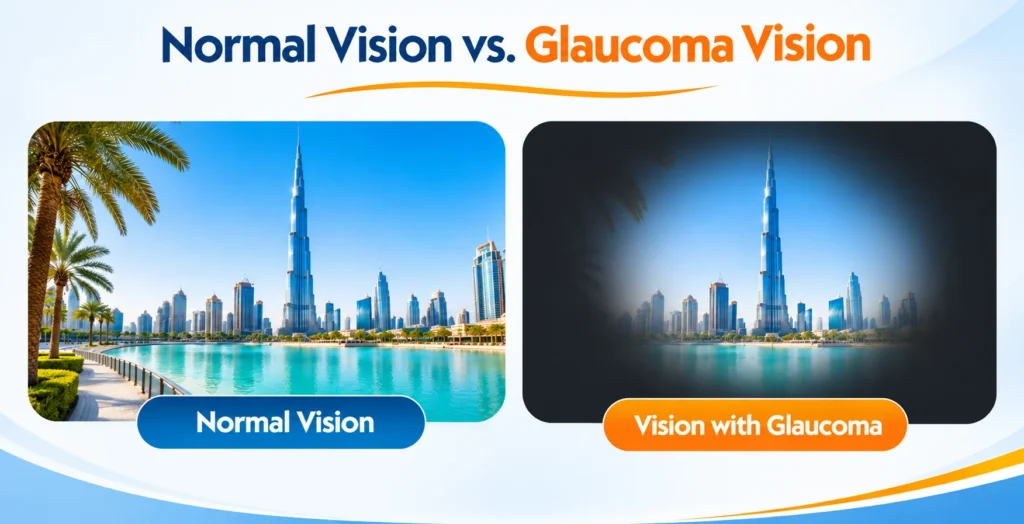
Symptoms of open-angle glaucoma
Open-angle glaucoma is the most common type of glaucoma. Vision loss usually starts at the edges and develops very slowly. It often affects both eyes, although one eye may be affected more than the other.
There is usually no eye pain or redness, and because the brain can compensate for missing areas of vision, many people do not realise anything is wrong for years. Central vision, which you use for reading, recognising faces, and seeing fine details, is usually preserved until the disease advances.
When people begin to notice changes, they may experience:
- Bumping into door frames, furniture or people on one side
- Missing a step or kerb
- Being surprised by cars or cyclists approaching from the side
- Needing brighter light than before
- Taking longer to adjust when moving from a bright area into a dim room
- Noticing a patch of missing vision when one eye is covered
These symptoms can have other causes, but they are worth discussing with an eye specialist.
How Glaucoma Symptoms Progress
| Stage | What you may notice |
|---|---|
| Early | No noticeable change, although small areas of peripheral vision may already be affected |
| Moderate | Blind spots in the side vision, sometimes noticed as misjudging steps or bumping into objects |
| Advanced | Increasingly narrow vision, sometimes described as looking through a tube; reading and driving may become difficult |
| Late | Loss of central vision and, if untreated, severe or permanent vision loss |
Symptoms of an Acute Angle-Closure Glaucoma Attack
In angle-closure glaucoma, the eye’s drainage angle can become blocked suddenly. Eye pressure can rise rapidly, causing symptoms that are usually much more noticeable than those of open-angle glaucoma.
Angle-closure glaucoma symptoms can include:
- Severe eye pain
- Headache, often around the eye or eyebrow
- Nausea or vomiting
- Blurred vision
- Rainbow-coloured halos around lights
- A red eye
- A pupil that may appear mid-sized and does not respond normally to light
- An eye that feels unusually hard
Acute glaucoma is an emergency
An acute attack can sometimes begin in the evening or in dim lighting, when the pupil becomes larger. Do not wait for the symptoms to settle. Seek emergency medical care immediately.
In Dubai, call 998 for an ambulance or go straight to an eye emergency service or the nearest emergency department. If possible, do not drive yourself. Tell the medical team that you may be experiencing an acute angle-closure glaucoma attack.
Rapid treatment matters because a significant rise in eye pressure can permanently damage the optic nerve.
Mild warning episodes
Some people experience milder episodes before a full angle-closure attack. These may include:
- Halos around lights
- A dull ache around the eye
- Temporary blurred vision
They may occur after spending time in the dark or after reading in dim light and then disappear on their own.
These symptoms can indicate that the drainage angle is narrow. Arrange an eye examination rather than waiting for a more severe attack.
Angle-closure glaucoma is more common in people of Asian descent and in long-sighted people, so these warning symptoms deserve particular attention among many residents of the UAE.
Symptoms of less common types
- Normal-tension glaucoma: the same slow loss of side vision as open-angle glaucoma, even though eye pressure measures normal.
- Neovascular glaucoma: a painful, red eye with falling vision, usually in people with diabetes or a retinal vein blockage.
- Uveitic glaucoma: a red, sore, light-sensitive eye linked to inflammation inside the eye.
- Pigmentary glaucoma: blurred vision or halos after exercise, more often in short-sighted younger adults.
- Steroid-induced glaucoma and glaucoma after eye injury: often no symptoms for years; the injury-related type can appear long after the injury.
Glaucoma Symptoms in Babies and Children
Childhood glaucoma is rare, and its symptoms can be different from those seen in adults.
Signs to watch for include:
- Constant or excessive tearing
- Unusual sensitivity to light
- A cloudy or hazy cornea
- One eye appearing larger than the other
- Squinting
- Frequent eye rubbing
Any of these signs in a baby or child should be assessed promptly by an eye specialist.
What glaucoma vision looks like
Unlike cataract, glaucoma doesn’t usually make everything look foggy. It removes areas of vision. At first it may be a small patch at the side. Later the edges close in, so you see the middle of a scene but not what lies on either side, a bit like looking through a keyhole. Contrast can fade too, making grey steps or dark objects harder to see.
Symptoms that are probably not glaucoma
| If you notice | More likely cause | How it differs from glaucoma |
|---|---|---|
| Floaters, flashes or a curtain over your vision | Retinal tear or detachment, or vitreous changes | Sudden new floaters or flashes require urgent assessment. Glaucoma does not usually cause these symptoms. |
| Foggy or cloudy vision and glare around lights | Cataract | Cataracts cloud the overall view, while glaucoma usually causes loss of specific areas of vision. |
| Distorted straight lines or a central blur | Macular disease | Macular conditions primarily affect central vision, while glaucoma usually affects peripheral vision first. |
| Blurred near vision after about age 40 | Presbyopia | Usually improves with reading glasses. |
| Itching, grittiness or watering | Dry eye or allergy | These are generally surface-eye problems rather than optic nerve damage. |
| Everyday headaches | Tension headache, migraine or eye strain | Chronic glaucoma does not normally cause headaches. |
You can’t reliably tell these apart at home, so if you’re unsure, get examined.
When Should You See a Doctor for Glaucoma Symptoms?
Seek emergency care immediately if you have:
- Sudden severe eye pain
- Eye pain with headache, nausea or vomiting
- Sudden blurred vision
- Halos around lights with eye pain or redness
- A red, painful or unusually hard-feeling eye
- Sudden loss of vision in either eye
These symptoms can indicate an acute eye emergency and should not be ignored.
Arrange an eye examination within the next few days if you notice:
- Missing patches in your vision
- Repeatedly bumping into objects on one side
- Changes in your peripheral vision
- Halos around lights that come and go
- Other unexplained changes in your eyesight
Regular eye examinations are also important because early glaucoma often has no noticeable symptoms.
What to Tell Your Eye Doctor
A clear description of your symptoms can help your doctor decide which tests you may need. Before your appointment, make a note of:
- When the symptoms started and whether they come and go
- Which eye is affected, or whether both eyes are affected
- Any pattern, such as halos appearing in the evening or after reading in dim light
- Any eye pain, headache, nausea or redness
- Steroid eye drops, tablets or other medicines you currently use or have used previously
- Any family history of glaucoma
- Whether you have diabetes or other relevant medical conditions
- Any previous eye injury or eye surgery
Bring your current glasses and any previous eye reports if you have them.
Noticed Symptoms of Glaucoma?
If you have noticed changes in your vision, especially loss of peripheral vision, or you are over 40 and have not had a glaucoma check, arrange an eye examination with an eye specialist.
You can learn more about glaucoma care or visit Vasan Eye & Multispeciality Day Surgical Centre, Dubai for an eye assessment.
Medical Disclaimer: This article is intended for general information only and does not replace an examination, diagnosis or treatment from a qualified doctor. If you experience sudden eye pain or sudden loss of vision, seek emergency medical care immediately.