
Cataract Symptoms: Early Signs and When to Seek Treatment
Cataract symptoms often begin so gradually that people mistake them for tired eyes or an outdated glasses prescription. Slight haze, glare from headlights or faded colours may go unnoticed for months. A cataract develops when the eye’s natural lens becomes cloudy, making it harder to see clearly.
According to the World Health Organisation (WHO), cataracts affect millions of people worldwide. Recognising the early signs can help you understand when it may be time to get your eyes checked. If you have noticed changes in your vision, an ophthalmology doctor in Dubai can examine your eyes and help identify the cause.
What Are the Symptoms of Cataracts?
The most common cataract signs and symptoms are blurred or cloudy vision, glare, halos around lights, poor night vision, faded colours, double vision in one eye and frequent changes in glasses prescription. They develop slowly and are usually painless.
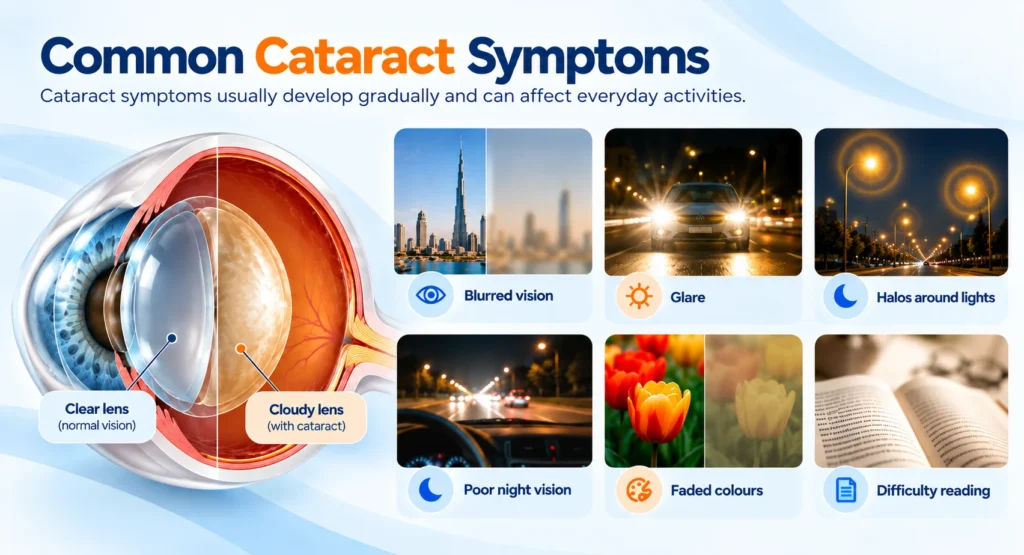
- Vision that looks hazy, foggy or “smudged” and does not clear when you blink
- Glare from sunlight, headlights or bright indoor lights
- Halos or rings around lights, especially at night
- Trouble seeing in dim light or when driving after dark
- Colours that look dull, brownish or yellow
- Double or ghosted images in one eye
- Needing brighter light to read
- Glasses that never seem quite right
Because cataracts rarely hurt, a lack of discomfort does not mean your eyes are healthy.
What Are the Early Symptoms of Cataracts?
Early-stage cataract symptoms are mild: slightly blurred vision, more sensitivity to glare and difficulty seeing in low light. According to the National Eye Institute, you may have no symptoms at all while a cataract is small.
- Night driving feels harder, with streaks or starbursts around headlights
- White objects, such as walls or paper, look creamy or yellow
- Small print needs more light than before
- You change your glasses prescription more often than usual
Early signs are easy to confuse with ordinary ageing, so an eye check is the only reliable way to tell.
How Does a Cataract Affect Your Vision?
Cataract vision symptoms happen because a clouded lens scatters light instead of focusing it. That scattering causes haze, glare and halos, while a yellow-brown tint in the lens dulls colours.
- Blur and haze: light spreads across the retina instead of landing in one sharp spot
- Glare and halos: scattered light turns headlights and street lamps into rings or starbursts
- Faded colours: the lens often yellows over time and filters out blues
- Poor night vision: less light reaches the retina, so dim settings get harder
- Double vision in one eye: uneven clouding splits one image into two, and it can fade as the cataract grows
This is why bright sunshine and night driving are often the first complaints.
What Are the Symptoms of Different Cataract Types?
Yes. Eye cataract symptoms vary with where the cloudiness forms. Nuclear cataracts affect the lens centre, cortical cataracts start at the edges, and posterior subcapsular cataracts form at the back of the lens.
- Nuclear cataract symptoms: gradual blur, yellowing of colours and sometimes a temporary improvement in near vision, called “second sight”, before distance vision worsens
- Cortical cataract symptoms: glare and light scatter first, as wedge-shaped streaks grow in from the lens edge
- Posterior subcapsular cataract symptoms: trouble reading, glare and halos in bright light, often with faster progression
Only an eye exam can identify your type, but your symptom pattern gives your doctor useful clues.
What Do Advanced Cataracts Look Like?
Mature or dense cataract symptoms include severely cloudy vision, strong glare, very faded colours and a white or milky look to the pupil. Reading, driving and recognising faces become difficult.
- Everyday tasks such as watching television or reading signs take real effort
- Daytime glare stays uncomfortable, even with sunglasses
- Glasses no longer sharpen your vision
- Driving, especially at night, may feel unsafe
Speed varies. Some people notice changes over a year, others over many years.
What Are the Symptoms of Cataracts in One Eye?
Symptoms of cataracts in one eye are the same as in both eyes, but they are easier to miss because your stronger eye compensates. The National Eye Institute notes that a cataract cannot spread from one eye to the other.
- Cover each eye in turn: if sharpness or colour looks different, tell your doctor
- Double or ghosted vision in one eye can occur with a cataract, but it may have other causes and should be assessed by an eye specialist.
- A past eye injury, eye surgery or inflammation can trigger a cataract in just one eye
If one eye seems different from the other, that alone is worth an eye exam.
How Do Glaucoma vs Cataract Symptoms Differ?
Cataracts cause hazy, glare-prone vision that develops gradually. Glaucoma usually damages side vision without warning, so the two feel quite different. An eye exam is the only way to be sure which one you have.
| Condition | Typical pattern |
| Cataract | Gradual cloudy vision, glare and faded colours |
| Glaucoma | Often no early symptoms; gradual peripheral vision loss in many forms |
| Acute angle-closure glaucoma | Sudden severe eye pain, red eye, blurred vision or halos, headache and nausea |
| Diabetic or macular disease | Central blur, distortion or dark patches |
| Dry eye | Burning, grittiness and fluctuating vision |
Halos appear in both cataracts and sudden glaucoma attacks, which is why guessing is risky. Vasan Eye also treats glaucoma, retinal conditions and dry eye, so one visit can look at all of these.
What Are the Symptoms of a Secondary Cataract After Surgery?
Secondary cataract symptoms are blurred or hazy vision, glare and halos that return months or years after cataract surgery. They happen when the lens capsule behind the new lens clouds over, and when treatment is needed, a YAG laser capsulotomy can usually restore a clearer visual pathway.
- Vision that was clear after surgery slowly becomes foggy again
- Glare and halos come back, especially at night
- It is not a new cataract, and the artificial lens itself does not cloud
- Severe pain, increasing redness or sudden vision loss soon after surgery needs urgent care, not a wait-and-see approach
Any change in vision after surgery is worth reporting to your surgeon.
When Should You Seek Treatment for Cataract Symptoms?
Seek an eye exam when blurred vision, glare or night-vision trouble lasts more than a few weeks or affects driving, reading or safety. Sudden vision loss, severe eye pain, new flashes of light or a dark curtain across your vision need same-day emergency care.
- Book soon if: your glasses stop helping, night driving worries you, or you avoid tasks you once enjoyed
- Seek urgent care if: vision drops suddenly, pain comes with headache or nausea, or flashes and floaters appear in large numbers
- Treatment: early symptoms may ease with new glasses and brighter light, but no drop clears a cataract. Surgery is usually discussed when symptoms interfere with daily life, and it is expected to improve your sight, according to the American Academy of Ophthalmology
- Routine checks: adults over 40 benefit from regular exams even without symptoms, and an RTA driving licence eye test can also flag vision changes
Most cataracts are not emergencies, but earlier advice gives you time to plan.
Worried About Cataract Symptoms? Get Your Eyes Checked in Dubai
Blurred vision, glare, faded colours or difficulty seeing at night can be signs of cataracts, although other eye conditions may cause similar symptoms. A comprehensive eye examination can help identify the cause and determine whether treatment is needed.
At Vasan Eye & Multispeciality Day Surgical Centre in Al Karama, Dubai, an ophthalmology doctor in Dubai can assess your symptoms and explain the next steps. An ophthalmology specialist in Dubai can also help you understand your diagnosis and the treatment options appropriate for your eye health.
If you have noticed changes in your vision, contact Vasan Eye to enquire about an eye examination, appointment availability and insurance coverage.
Medical disclaimer: This article is intended for general educational purposes and does not replace personalised medical advice. Consult a qualified ophthalmologist about changes in your vision. Sudden vision loss or severe eye pain requires urgent medical assessment.
References: