

Keratoconus Treatment in Dubai
The advancements in ophthalmic technology have revolutionised the way eye diseases are diagnosed and managed, providing more treatment options than ever before. These advancements have been widely accepted and accessed by various countries. One such example of a developed procedure which has been preferred by multiple patients across the globe is keratoconus treatment in Dubai.
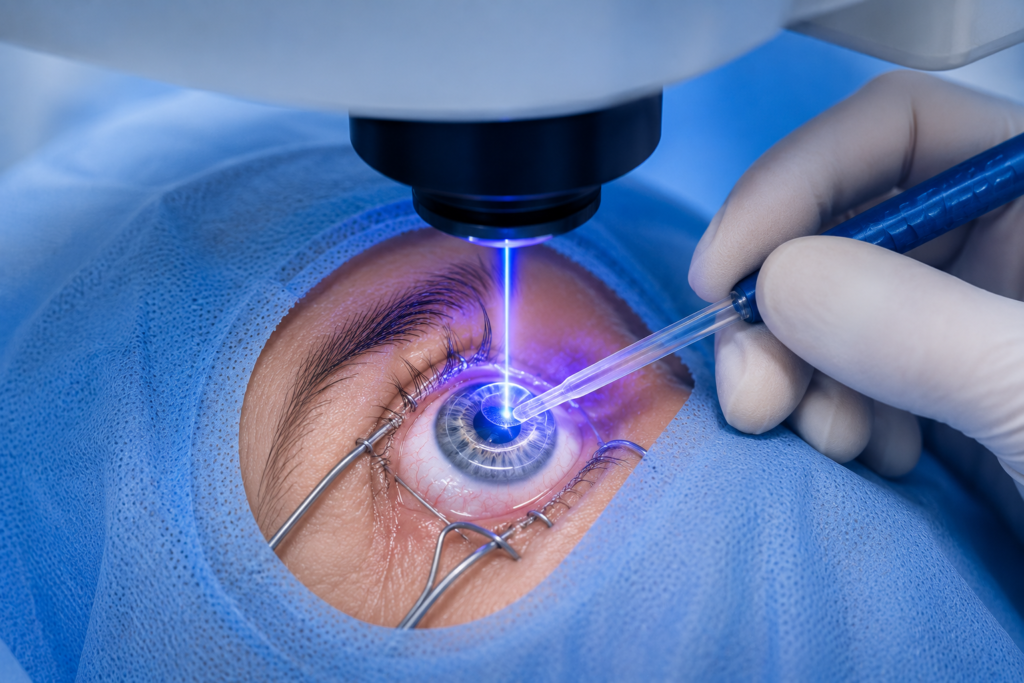
From custom-made contact lenses to corneal imaging techniques to breakthrough treatments like Corneal Collagen Cross-Linking (CXL), contemporary ophthalmology is making significant progress when it comes to the treatment of degenerative keratitis diseases.
Known for its exceptional healthcare facilities, advanced medical equipment, and expert eye physicians, Dubai has emerged as a popular choice for patients with keratoconus treatment requirements. Using the latest diagnosis methods and customised treatments, patients will find effective solutions that prevent the progression of the disease.
What Is Keratoconus?
Understanding The Dynamics
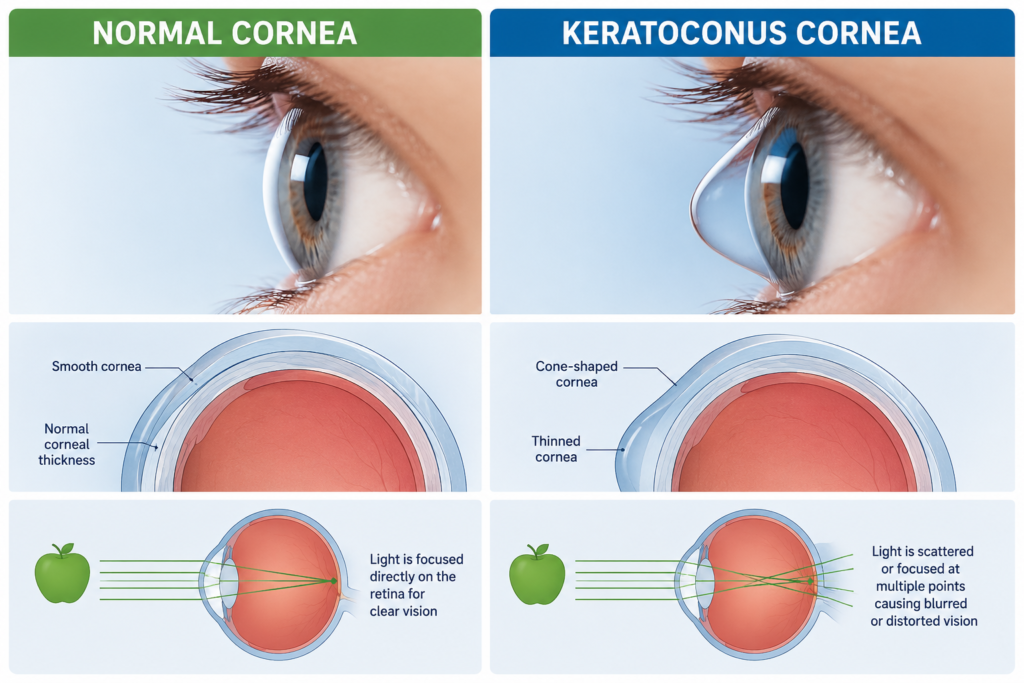
The cornea is the transparent dome at the front of the eye, responsible for bending light onto the retina and creating clear vision. Keratoconus refers to an eye disease in which the cornea bulges in a cone-like manner, leading to poor vision. When the cornea changes shape due to thinning, the eye cannot focus light onto the retina, resulting in vision problems.
The person's vision appears blurred, and objects look like they have a starburst around them. Vision becomes very sensitive to glare and bright lights, which results in squinting to improve vision. In addition, the individual experiences frequent changes in eyeglass prescriptions. Nearsightedness and astigmatism also increase as a result of this problem.
Most cases of keratoconus occur among teenagers and young adults before advancing in age. Though the cause is unknown, genetic inheritance is considered a risk factor along with eye rubbing habits and other diseases. It is important to diagnose the disease in its early stages since treatment helps slow down its progression and protect the eye from deteriorating further.
Meet Our Specialist
Vasan Eye Dubai

Dr. Umesh Patinjarekandy
Specialist Ophthalmologist | Phaco & Refractive Surgeon
MBBS, MS Ophthalmology
location_on Vasan Eye & Multispeciality Day Surgical Center, Dubai
schedule 30+ Years of Experience
medical_services 25000+ Surgeries Performed

Dr. Tahere Rezaei
Specialist Ophthalmologist | Cataract & Refractive Surgeon
MBBS, MD Ophthalmology
location_on Vasan Eye & Multispeciality Day Surgical Center, Dubai
schedule 11+ Years of Experience
medical_services 10000+ Surgeries Performed

Dr. Lakshmi K. Vijayaraghavan
Specialist Ophthalmologist | Medical Retina Specialist
MBBS, MS (Ophthalmology), Fellowship in Medical Retina & ROP
location_on Vasan Eye & Multispeciality Day Surgical Center, Dubai
schedule 7+ Years of Experience

Dr. Nikhil Pal
Specialist Ophthalmologist | Retina & Uvea Specialist
MBBS, MD Ophthalmology (AIIMS, New Delhi, India), Vitreoretina Fellow (Univ Of Wisconsin, Madison, USA)
location_on Vasan Eye & Multispeciality Day Surgical Center, Dubai
schedule 25+ Years of Experience
medical_services 20000+ Surgeries Performed
Signs and Symptoms of Keratoconus
Signs You Should Not Ignore
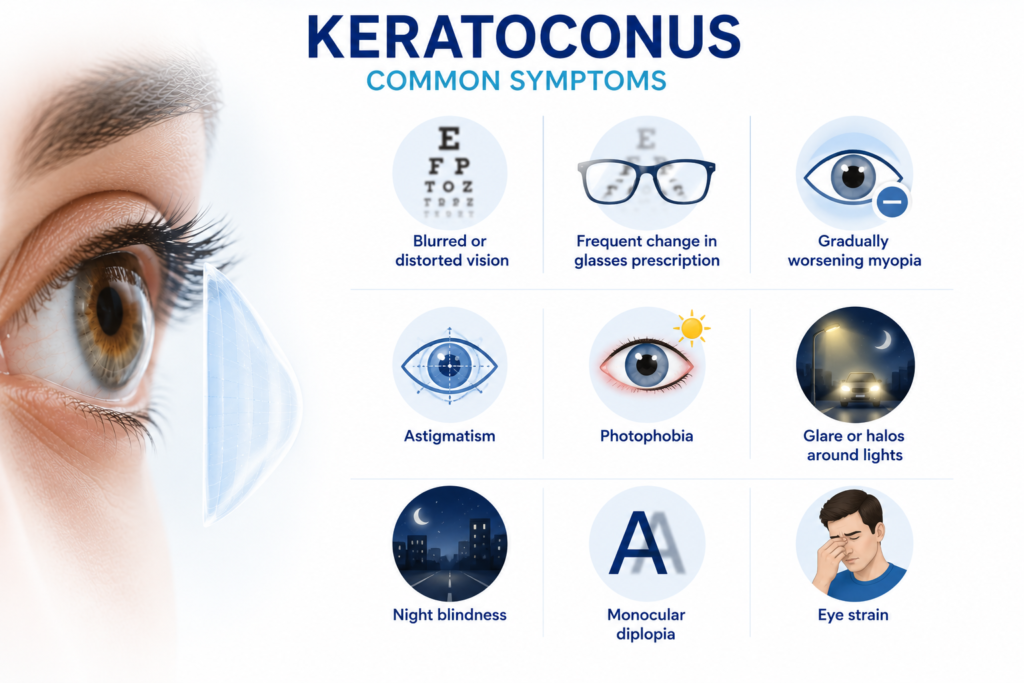
Keratoconus symptoms usually manifest slowly and may become more visible as the condition advances. Though there will always be different levels of severity from one person to another, detecting these symptoms as soon as possible is important to facilitate early diagnosis and treatment. A few common symptoms include:
- Blurred or distorted vision
- Frequent change in glasses prescription
- Gradually worsening myopia
- Astigmatism
- Photophobia
- Glare or halos around lights
- Night blindness
- Monocular diplopia
- Eye strain
- Visual fatigue
- Headaches due to vision problems
- Difficulty reading or concentrating on fine details
- Poor quality of vision despite correction
What Are The Causes That Lead to Keratoconus?
Common Causes Behind Keratoconus
The exact cause of keratoconus is yet unclear. Nevertheless, several possible factors have been established that may cause weakening and thinning of the cornea.
- Genetic predisposition to keratoconus: People who come from families where cases of keratoconus have occurred before tend to be more prone to developing the disease due to the significant hereditary factor.
- Repetitive and aggressive eye rubbing: Excessive rubbing of the eyes can weaken corneal tissues, leading to faster development of keratoconus.
- Frequent eye irritation caused by allergic reactions: Cases of allergic conjunctivitis result in chronic eye rubbing and inflammation, and thus increase the risk of corneal damage.
- Deterioration of collagen fibres: Collagen fibres play an essential role in maintaining the shape and integrity of the cornea. The weakening of these fibres results in their distortion.
- Underlying disorder: Diseases such as asthma, eczema, and hay fever often correlate with eye irritations resulting from constant rubbing.
- Connective tissue disorder: Inherited syndromes that affect connective tissues and the structure of the collagen fibres can increase the risk of developing keratoconus.
- Oxidative stress causes corneal damage: The imbalance between free radicals and antioxidant enzymes can harm corneal tissues, making them weaker.
Understanding The Treatment Approaches
Treatment Options For Your Successful Recovery
The treatment modality in patients suffering from keratoconus varies depending on the stage of the problem and severity. Improvement of vision, prevention of corneal thinning and disease recovery are some of the major objectives of keratoconus treatment.
- Glasses and Soft Contact Lenses: Early stages of keratoconus can be addressed using prescription glasses or soft contacts, which will help correct mild vision problems. Routine visits to an eye clinic are necessary to ensure regular monitoring.
- Speciality Contact Lenses: With the progress of the disease, conventional lenses may become ineffective. In this case, a specialist may recommend rigid gas permeable (RGP) lenses or hybrid or scleral lenses, which will fit better over an irregularly shaped cornea.
- Corneal Collagen Cross-Linking (CXL): This type of treatment is aimed at strengthening the cornea through cross-linking collagen fibres, which makes the cornea stiffer and prevents the condition from progressing.
- Intracorneal Ring Segments (ICRS): ICRS involves the placement of special segments into the cornea that will reshape it. This technique helps improve vision quality and reduce dependence on contact lenses.
- Corneal Transplant: In case the cornea is extremely thin or scarred, a transplant may be required. In the transplant process, the ophthalmologist uses healthy tissue from the donor’s cornea to replace the keratoconus cornea.
Why Choose Us?
Vasan Eye & Multispeciality DSC for Keratoconus Treatment in Dubai
Treatment for keratoconus demands prompt diagnosis, latest treatment methods, and expert management. Vasan Eye & Multispeciality DSC is committed to offering our patients complete keratoconus treatment utilising cutting-edge technologies and personalised treatments for each individual patient. Patients choose us to receive the keratoconus treatment in Dubai for our:
- Specialised and experienced team: A team of medical specialists at Vasan has vast experience in diagnosing and managing cases of keratoconus through all stages – from diagnosis to treatment.
- Modern diagnostic tools: There is a use of cutting-edge diagnostics that include corneal topography and corneal imaging in order to diagnose keratoconus and evaluate its progress.
- Comprehensive treatment methods: A wide variety of treatment methods, which can include fitting contact lenses, Collagen Corneal Cross-linking (CXL), corneal ring segments, and transplantation.
- Personalised Treatment: A personalised treatment method is offered to each patient depending on their cornea, lifestyle, and visual demands.
- Patient-Friendly Approach: At Vasan, the number-one priority is making sure that you remain comfortable, safe, and healthy during all treatment procedures.
- Post-Treatment Follow-Up: Follow-up appointments and consistent monitoring will guarantee successful treatment results.
Vasan Eye & Multispeciality DSC strives to ensure you have your vision intact and your life enriched. Book an appointment today to get assistance for your successful treatment with the best ophthalmologists in Dubai.
Frequently Asked Questions
Everything you need to know before your consultation
Is Keratoconus treatment in Dubai Painful? expand_more
All procedures for keratoconus treatment in Dubai involve the use of eye drops as anaesthetics, ensuring that the treatment process is almost painless. Patients may suffer from discomfort, light sensitivity, and grittiness in the eyes shortly after being treated, especially if corneal cross-linking has been applied. Such problems are temporary, as the eye will heal.
Can keratoconus be cured permanently? expand_more
There is no cure for keratoconus because the disease involves permanent changes in the structure of the cornea. Although such conditions can be successfully slowed down by applying measures such as corneal cross-linking, other treatments like using special contacts, ring segments in the cornea, or even transplanting it can improve patients' lives.
What is the keratoconus treatment cost in Dubai? expand_more
Keratoconus treatment cost in Dubai usually starts from AED 5,500 ($1,500) and can vary based on the nature of the condition, the treatment method, the technology, and the healthcare facilities utilised. An assessment of the case should be undertaken in order to define the right course of action and estimate how much it would cost.
What are the early signs of keratoconus? expand_more
Early signs of keratoconus include poor sight, photophobia, rapid changes of glasses prescriptions, halo effect and difficulty with night vision. Some people may experience straining eyes and headaches because of continuous changes in vision. Early consultation allows for starting to start treating the disease properly and avoiding its aggravation.
When should I consult a specialist for keratoconus? expand_more
You should visit an eye doctor if you have poor sight or problems with changing your glasses, increased sensitivity to light, rapid deterioration of vision, which cannot be corrected by glasses. If you have keratoconus in your family or rub your eyes too often, you should visit your doctor on a regular basis.
How long does it take to recover after surgery? expand_more
The recovery period depends on the surgery type used for treating keratoconus. After performing the corneal cross-linking procedure, most patients recover quickly, but the total rehabilitation period takes several weeks. Recovery after a corneal transplant lasts longer because the body needs some time to heal and improve vision.