

Macular Edema Treatment in Dubai
Macular edema treatment in Dubai begins with identifying why fluid has built up in the macula, the part of the retina responsible for detailed central vision. At Vasan Eye & Multispeciality Day Surgical Center in Al Karama, a retina specialist can assess the swelling using tests such as optical coherence tomography (OCT) and recommend treatment based on its cause and severity. Options may include eye injections, laser treatment or other medicines.
What Is Macular Edema?
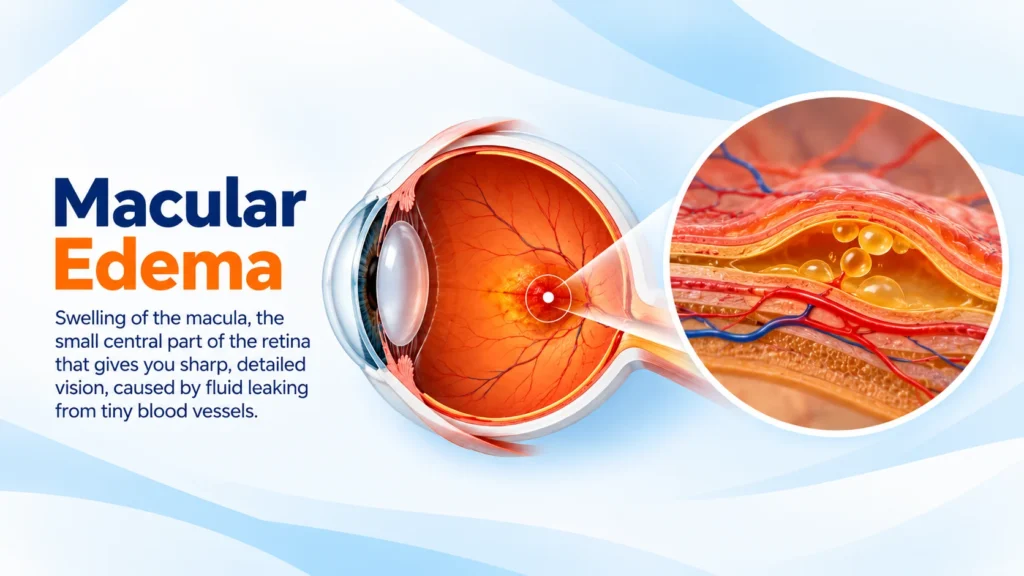
Macular edema (also spelt macular oedema) is swelling of the macula, the small central part of the retina that gives you sharp, detailed vision. It happens when fluid leaks from tiny blood vessels. It is the result of another condition rather than a disease on its own, and long-standing swelling can permanently damage central vision.
- It is also called macular swelling or retinal swelling.
- Diabetic macular edema (DME) is the form linked to diabetes. A global analysis cited in 2023 Australian guidelines found DME in roughly 7% of people with diabetes.
- In the UAE, the IDF estimates 20.7% of adults aged 20 to 79 live with diabetes (about 1.27 million people in 2024), and an estimated 64% of cases are undiagnosed, so some people have retinal damage without knowing the cause.
Even a small area of swelling can affect everyday vision, which is why a prompt check matters.
What Are the Symptoms of Macular Edema?
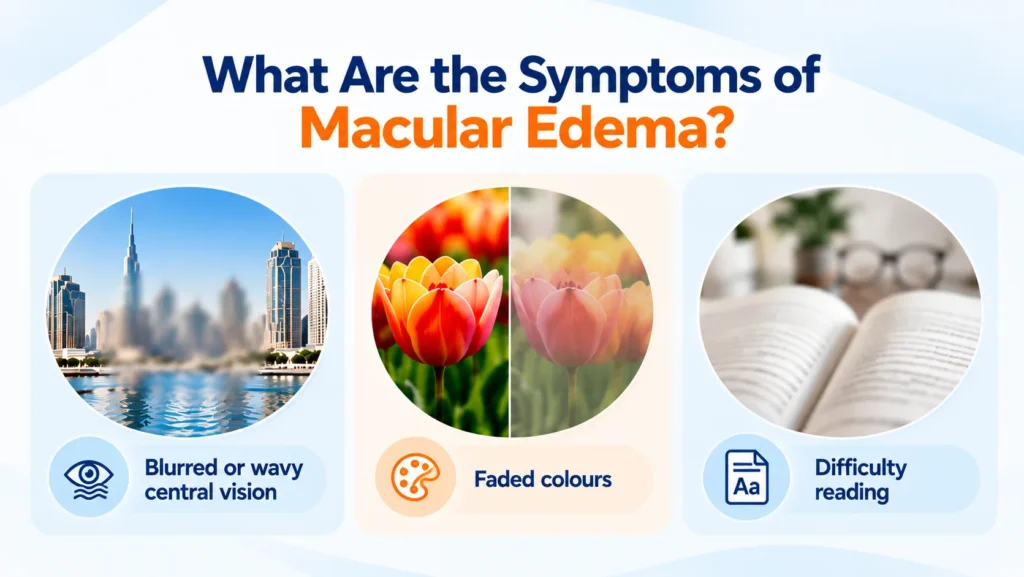
Macular edema symptoms commonly include blurred or wavy central vision, faded colours and difficulty reading. The condition is often painless, and early swelling may cause no noticeable symptoms. People with diabetes should therefore follow their recommended retinal screening schedule even when their vision feels normal.
Common symptoms include:
- Blurred or hazy central vision: Objects may look unclear, and straight lines may appear bent or wavy.
- Faded colours: Colours may seem less bright or appear washed out.
- Difficulty reading or recognising faces: Small print and fine details may become harder to see.
- Distorted vision: Objects may look different in size or shape, depending on the underlying retinal problem.
When to seek urgent care: Sudden vision loss, a new shower of floaters or a dark curtain across your vision requires urgent same-day eye assessment. These symptoms may indicate a sight-threatening retinal condition and should not be assumed to be macular edema.
If you notice persistent changes in your central vision, arrange a retinal examination rather than waiting for the symptoms to settle.
Reach Out for Expert Care
What Causes Macular Edema?
Among macular edema causes, diabetes is the most common. Retinal vein blockage, age-related macular degeneration, eye inflammation (uveitis), certain medicines and eye surgery can also cause fluid to build up. Treatment depends on identifying which cause applies to you.
- Diabetic retinopathy: high blood sugar damages retinal vessels and makes them leak. Read more about diabetic retinopathy care at Vasan Eye.
- Retinal vein occlusion: a blocked retinal vein causes swelling and bleeding. We treat retinal vein occlusion with the same imaging-led approach.
- Age-related macular degeneration and uveitis can both leak fluid into the macula.
- Risk factors: long-standing diabetes, high blood pressure and high cholesterol.
Finding the cause shapes the whole treatment plan, so avoid self-diagnosing from symptoms alone.
How Is Macular Edema Diagnosed?
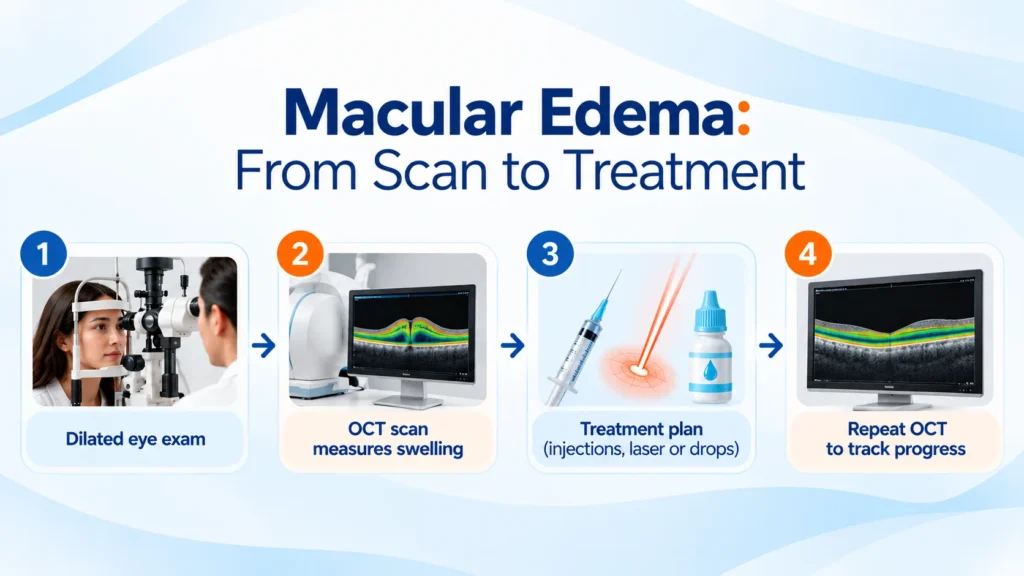
Macular edema is diagnosed with a dilated eye exam and an OCT scan. OCT is a quick, painless test that takes cross-section pictures of the retina and measures how thick the macula is. Fluorescein angiography may be added to locate leaking vessels.
- Dilated exam: your specialist inspects the macula and retinal vessels.
- Macular edema OCT scan: takes minutes, needs no eye contact and shows fluid clearly. It is repeated to track your response.
- Fluorescein angiography and fundus photography: show leaking or blocked vessels.
Accurate diagnosis keeps you from receiving treatment that does not match your type of swelling.
What Are the Macular Edema Treatment Options?
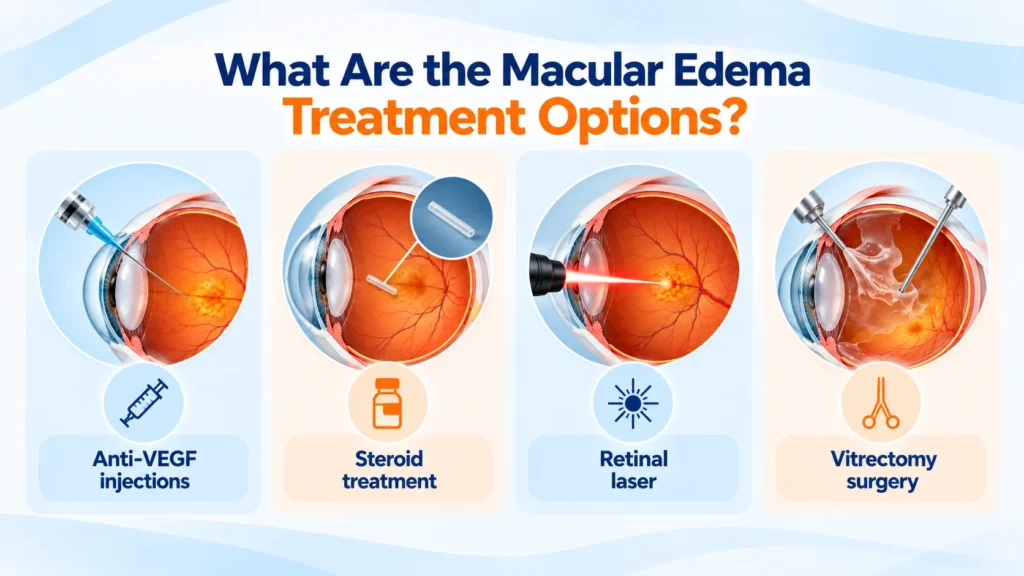
Macular edema treatment depends on its underlying cause, the amount and location of swelling, and your vision. Options may include:
- Anti-VEGF injections: commonly used for diabetic macular edema involving the centre of the macula and certain other retinal conditions.
- Steroid treatment: may be considered in selected cases, including some patients who respond inadequately to anti-VEGF treatment or for whom it is unsuitable. Steroids can raise eye pressure and increase cataract risk, so monitoring is important.
- Retinal laser: may be appropriate for selected patterns of retinal leakage, including some cases of diabetic macular edema that do not involve the centre.
- Vitrectomy surgery: may be considered when traction from the vitreous or another surgical retinal problem contributes to macular swelling.
- Managing the underlying condition: controlling blood glucose, blood pressure and cholesterol is an important part of care for patients with diabetes and vascular risk factors.
Your retina specialist will recommend a treatment plan based on your diagnosis and clinical findings.
How Do Eye Injections for Macular Edema Work?
Macular edema eye injections place medicine inside the eye to reduce leakage and swelling. Anti-VEGF injections block a protein that makes retinal vessels leak. The procedure is brief and done under local anaesthesia, so most patients find it comfortable.
- Common medicines: ranibizumab and aflibercept are widely used, according to the American Society of Retina Specialists.
- Course of treatment: Emirates guidance suggests 3 to 6 monthly loading injections, then OCT-guided spacing. Around 8 to 9 injections in year one and 5 to 6 in year two is typical for diabetic swelling.
- Who should wait: Emirates guidance advises avoiding anti-VEGF for at least 3 months after a heart attack or stroke, and during pregnancy or breastfeeding. Tell your doctor if this applies.
- Risks: serious problems are rare, but infection, bleeding, retinal detachment and a short rise in eye pressure can occur. Call the clinic at once for eye pain, redness, new floaters, light sensitivity or reduced vision.
- Learn about anti-VEGF injections in Dubai at Vasan Eye.
Your first follow-up is usually 4 to 6 weeks after an injection, so plan your visits in advance.
Reach Out for Expert Care
How Is Diabetic Macular Edema Treated in Dubai?
Diabetic macular edema treatment in Dubai (also called diabetic maculopathy treatment) usually combines anti-VEGF injections with tighter control of blood sugar, blood pressure and cholesterol. The Emirates Society of Ophthalmology recommends anti-VEGF as first-line treatment for centre-involving DME unless it is contraindicated.
- Injections first for central swelling: these are guided by OCT thickness and your vision.
- Laser for selected cases: mainly swelling away from the centre.
- No need to wait: Emirates guidance says anti-VEGF works regardless of HbA1c, so treatment should not be delayed for sugar control.
- Insurance and cost: cost depends on the medicine, number of injections and your policy. Check insurance and payment options or ask for an estimate.
Controlling diabetes alongside injections gives treatment the best chance of working over time.
How Do I Choose a Macular Edema Specialist in Dubai?
A macular edema specialist is a retina specialist: an ophthalmologist trained in diseases of the retina and macula. Look for on-site OCT, experience with injections and a clear follow-up plan. Vasan Eye has a medical retina specialist and a visiting vitreoretinal surgeon.
- Dr. Lakshmi K. Vijayaraghavan: medical retina fellowship-trained macular edema doctor in Dubai.
- Dr. Nikhil Pal: retina and uvea specialist with vitreoretina fellowship, visiting Vasan Eye.
- Location: Zabeel Plaza, Zabeel Road, Al Karama. No referral is needed for a consultation.
- Living elsewhere in the UAE or travelling from abroad? See our international patient guide.
Our retina services in Dubai bring diagnosis, injections, laser and surgery together under one roof.
Book Your Macular Edema Consultation in Dubai
If you notice blurred or wavy central vision, or you have diabetes and have not had a retinal check this year, a scan can give you clear answers. Book an appointment with the retina team at Vasan Eye & Multispeciality DSC, Al Karama, Dubai.
Medical disclaimer: General education only. It does not replace an ophthalmologist’s examination.
References:
- Emirates Society of Ophthalmology, Management of Diabetic Macular Edema guidelines (Ophthalmol Ther, 2022)
- Saudi Retina Group, Saudi Arabia Guidelines for diabetic macular edema (Saudi Med J, 2021)
- Yuen YS et al., Diabetic Macular Oedema Guidelines: An AustZLralian Perspective (J Ophthalmol, 2023)
- IDF, Diabetes in the United Arab Emirates (2024; 20.7% age-standardised prevalence, ages 20 to 79)
- American Society of Retina Specialists, Macular Edema
- Prophylactic regimens for pseudophakic cystoid macular edema (Int J Retina Vitreous, 2024)
- Vasan Eye retina services page (diagnostics, injections, doctors)

Vasan Eye & Multispeciality DSC's Medical Content Team
Vasan Eye & Multispeciality DSC’s medical content team specialises in creating accurate, clear, and patient-focused healthcare content. With strong clinical understanding and expertise in technical writing and SEO, the team translates complex medical information into reliable, accessible resources that support informed decisions and uphold Vasan Eye & Multispeciality DSC’s commitment to quality care.