
Cataract Surgery Recovery Time: What to Expect After the Procedure
Cataract surgery is usually a short procedure, but what happens once you return home? How soon will your vision become clearer? When can you start working, driving or using your phone again? And which symptoms are a normal part of recovery?
These are common questions patients have after cataract surgery. While many people notice an improvement in their vision within a few days, the eye needs more time to heal and adjust.
Knowing how long cataract surgery recovery takes and what precautions to follow can help you feel more prepared during the healing process. Following your ophthalmologist’s instructions, using prescribed eye drops and attending follow-up appointments are important parts of the healing process.
Here is what you can generally expect after surgery, along with practical care tips and warning signs to watch for.
How Long Does Cataract Surgery Recovery Take?
Most patients can resume light daily activities within a few days of cataract surgery. However, complete healing and visual stabilisation may take several weeks.
The recovery period varies depending on your eye health, the complexity of the procedure, the type of artificial lens implanted and whether you have other eye conditions, such as glaucoma or diabetic eye disease.
Some patients notice clearer vision soon after surgery, while others experience temporary blurriness or fluctuations as the eye heals. Your ophthalmologist will monitor your progress and advise when you can safely return to your usual activities.
Cataract Surgery Recovery Timeline
Although recovery is different for everyone, the following timeline gives a general idea of what to expect.
| Recovery stage | What you may experience |
| First 24 hours | Mild blurriness, watering, light sensitivity or a gritty sensation may occur. Rest and follow your prescribed eye-drop schedule. |
| Days 2–3 | Vision may begin to improve, although some fluctuations can continue. Mild irritation may still be present. |
| Days 4–7 | Many patients become more comfortable with everyday activities. Continue protecting the operated eye and using prescribed medication. |
| Following weeks | Vision and eye comfort generally continue to stabilise. Follow-up examinations help your ophthalmologist monitor healing. |
Do not worry if your recovery does not follow this exact timeline. What matters is that your eye is healing as expected. If your vision suddenly worsens or you develop significant pain, seek prompt medical attention.
Essential Care and Recovery Tips After Cataract Surgery
The first few weeks after surgery are important for protecting your operated eye. A few simple precautions can help reduce irritation and support a comfortable recovery.
1. Use Your Prescribed Eye Drops
Your ophthalmologist may prescribe eye drops to prevent infection, control inflammation or support healing.
- Wash your hands before applying eye drops.
- Avoid touching the dropper tip to your eye, eyelid or fingers.
- Follow the prescribed dosage and schedule.
- Do not stop or change your medication without consulting your surgeon.
If you have been prescribed more than one type of eye drop, ask your clinic how much time to leave between applications.
2. Avoid Rubbing or Pressing Your Eye
Your operated eye may feel slightly itchy or uncomfortable during recovery. However, rubbing or pressing it can cause unnecessary irritation.
If you experience persistent itching or discomfort, speak to your ophthalmologist before using additional eye drops or home remedies.
3. Be Careful While Washing Your Face and Showering
You can usually maintain personal hygiene after surgery, but avoid splashing water directly into the operated eye. Keep soap and shampoo away from the eye and do not rub your eyelids while washing your face.
Gently pat the surrounding skin with a clean towel. Follow your surgeon’s advice about when you can resume your normal bathing routine.
4. Protect Your Eyes from Bright Light
Some patients experience light sensitivity during early recovery. Wearing sunglasses outdoors can help reduce glare and improve comfort. Choose sunglasses that provide UV protection.
If your surgeon recommends wearing a protective eye shield, use it for the advised duration, particularly while sleeping.
5. Avoid Dust and Strenuous Activities
Try to avoid dusty environments and activities that could expose the operated eye to dirt or accidental injury. Do not resume heavy lifting, strenuous exercise or swimming until your surgeon confirms that it is safe.
These simple cataract recovery tips can help you protect your eyes while they heal.

When Can You Return to Normal Activities?
Many patients can resume light daily activities within a few days. However, the timing depends on your comfort, vision and the nature of the activity.
| Activity | General guidance |
| Walking | Gentle walking is often possible soon after surgery if you feel well. |
| Reading and screen use | Usually possible when comfortable. Take regular breaks if your eyes feel tired. |
| Cooking | Light cooking may be possible. Avoid smoke, dust and accidental splashes near the eye. |
| Driving | Do not drive until your vision meets the required standard and your surgeon confirms it is safe. |
| Exercise | Return gradually. Ask before resuming strenuous workouts or heavy lifting. |
| Swimming | Avoid swimming until your ophthalmologist gives approval. |
When Can You Return to Work?
Your return-to-work timeline depends on your job. People with desk-based jobs may be able to return sooner than those whose work involves physical effort, dust, chemicals or heavy lifting.
If your job involves driving, operating machinery or tasks requiring precise vision, get clearance from your ophthalmologist before returning.
Rather than following a fixed number of days, plan your return around your recovery and your surgeon’s advice.
Is Blurry Vision Normal After Cataract Surgery?
Some blurriness is common during early recovery. Your vision may take time to settle as the eye heals and adjusts to the artificial lens.
You may temporarily notice:
- Hazy or cloudy vision.
- Mild fluctuations in visual clarity.
- Sensitivity to bright light.
- Glare or halos around lights.
These symptoms should generally improve as recovery progresses. However, sudden vision loss or worsening blurriness should never be ignored. Persistent visual changes need an examination to identify the underlying cause.
Your ophthalmologist can also advise when your vision is stable enough for a new glasses prescription. For many patients, this is considered around four to six weeks after surgery, although the timing varies.
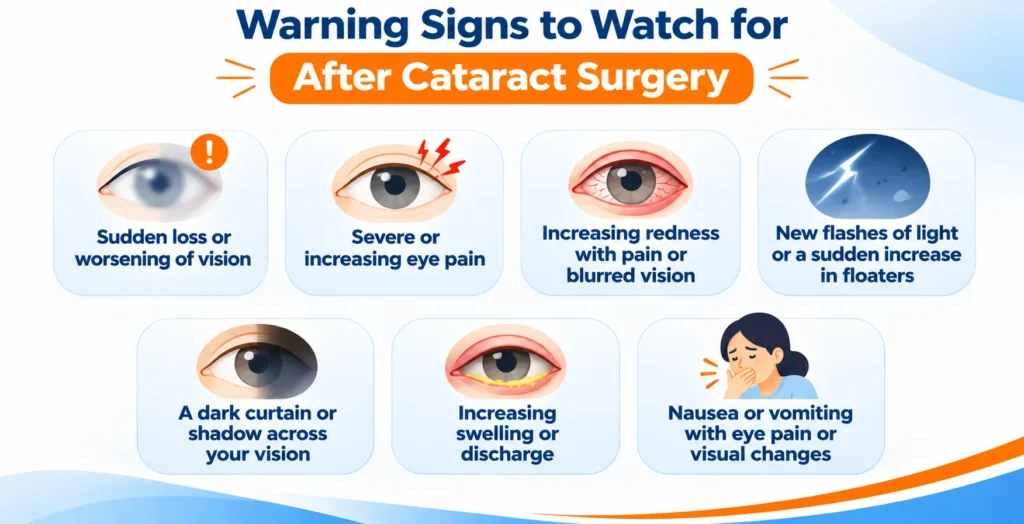
Warning Signs to Watch for After Cataract Surgery
Mild irritation and temporary blurriness may occur during recovery, but certain symptoms require prompt medical attention.
Contact your eye surgeon or seek urgent ophthalmic assessment if you experience:
- Sudden loss or significant worsening of vision.
- Severe or increasing eye pain.
- Increasing redness, especially with pain or blurred vision.
- New flashes of light or a sudden increase in floaters.
- A dark curtain or shadow moving across your vision.
- Increasing swelling or discharge.
- Nausea or vomiting accompanied by eye pain or visual changes.
Do not wait for your next scheduled appointment if any of these symptoms occur. Some postoperative complications require urgent treatment.
Follow-Up Care After Cataract Surgery in Dubai
Recovery does not end when the procedure is over. Follow-up examinations help your ophthalmologist monitor healing, assess your vision and address any concerns.
At Vasan Eye & Multispeciality Day Surgical Center in Al Karama, Dubai, you can consult the ophthalmology team for eye assessments and guidance on postoperative care.
If you have questions about your recovery or notice an unexpected change in your vision, contact the clinic for guidance.
Vasan Eye & Multispeciality Day Surgical Center
Location: Zabeel Plaza, Zabeel Road, Al Karama, Dubai, UAE
Call: +971 55 396 3542
WhatsApp: +971 56 771 5659
Timings: Monday to Saturday, 8 AM–9 PM; Sunday closed.
If you are researching the procedure itself, you can also explore our cataract surgery in Dubai guide.
Frequently Asked Questions
1. Can I sleep on my side after cataract surgery?
Your surgeon may recommend avoiding pressure on the operated eye, particularly during early recovery. If you have been advised to wear an eye shield while sleeping, use it as instructed.
2. Can I watch TV or use my mobile phone after cataract surgery?
In most cases, you can use screens when comfortable. Take regular breaks and reduce brightness if you experience eye strain or discomfort.
3. Can I wash my face after cataract surgery?
You can usually wash your face carefully, but avoid splashing water directly into the operated eye. Follow your surgeon’s instructions about when to resume your usual routine.
4. Why do colours look brighter after cataract surgery?
A cataract can make colours appear dull or yellowish because the cloudy natural lens affects how light reaches the retina. After its removal, colours may appear brighter and more vivid.
5. When can I start exercising again?
Gentle walking may be possible soon after surgery, but strenuous exercise and heavy lifting may need to be avoided temporarily. Ask your ophthalmologist before returning to your usual workout routine.
6. What should I do if my vision becomes blurry again?
If your vision suddenly becomes blurry or worsens after initially improving, contact your eye surgeon for an assessment. Do not assume that it is a normal part of healing.
Medical Disclaimer
This article is intended for general educational purposes and should not replace an examination or personalised advice from an ophthalmologist. Recovery instructions may differ depending on the patient, procedure and individual eye health. Always follow the guidance of your treating surgeon.
References
1. American Academy of Ophthalmology – Cataract Surgery