
Ocular Hypertension Treatment in Dubai
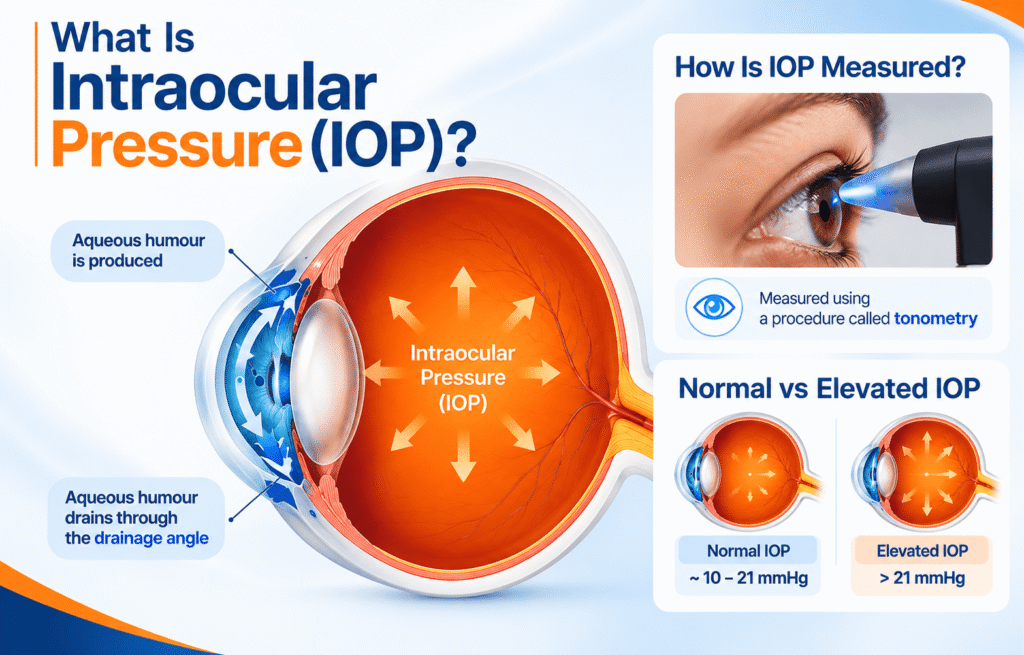
Ocular hypertension occurs when the pressure inside the eye, known as intraocular pressure (IOP), is above the normal range without clear signs of optic nerve damage. Although it does not always lead to vision problems, elevated eye pressure can increase the risk of developing glaucoma.
Ocular hypertension usually has no noticeable symptoms, which means a person may not realise their eye pressure is high without an examination. Regular eye check-ups can help identify elevated pressure and determine whether monitoring or treatment is needed.
If you are looking for information about ocular hypertension in Dubai, understanding its causes, risk factors, and available treatment options at Vasan Eye & Multispeciality Day Surgical Centre can help you make informed decisions about your eye health.
What Is Ocular Hypertension?
Ocular hypertension means that the pressure inside the eye is higher than expected, but there is no established glaucomatous optic nerve damage.
The eye continuously produces a clear fluid called aqueous humour. This fluid circulates through the front part of the eye and drains through a network of channels. When fluid production and drainage are not properly balanced, pressure inside the eye may increase.
Eye pressure is commonly considered to be within the usual range at approximately 10–21 mmHg. However, a reading above this range does not automatically mean that a person has glaucoma. Corneal thickness, optic nerve health and other individual risk factors must also be considered.
What Causes High Eye Pressure?
Several factors can contribute to ocular hypertension. In some people, more than one factor may be involved.
Common ocular hypertension causes include:
- Reduced fluid drainage: If aqueous humour does not drain efficiently, pressure inside the eye may increase.
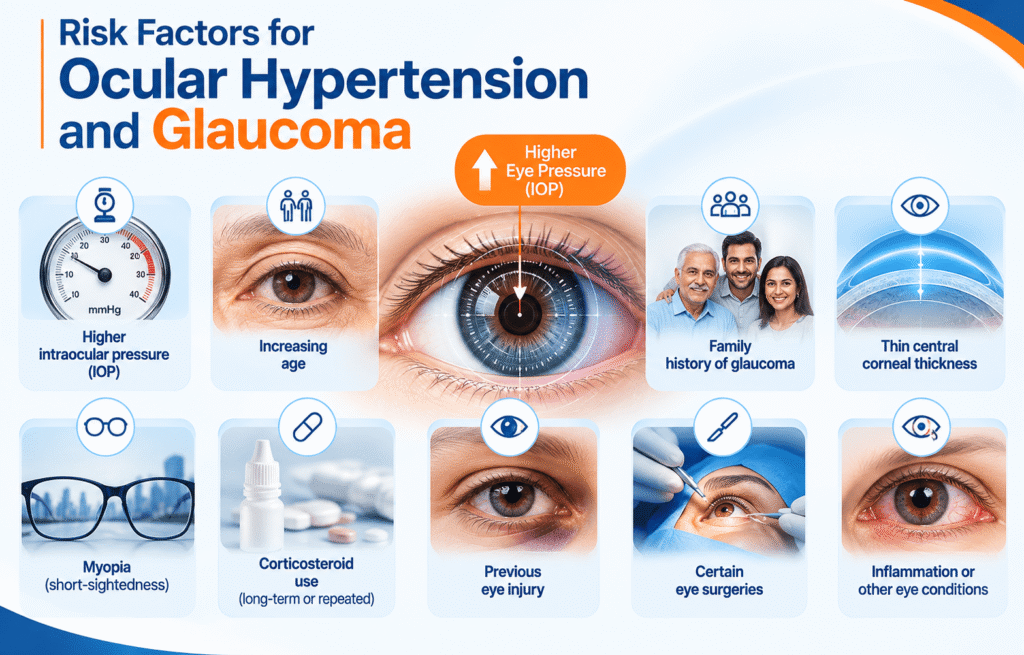
- Family history: Having a close relative with glaucoma may increase the risk of developing elevated eye pressure and glaucoma.
- Age: The risk of ocular hypertension and glaucoma can increase with age.
- Steroid medication: Certain steroid eye drops, oral medicines and injections can raise eye pressure in susceptible individuals.
- Eye-related factors: The structure of the eye, drainage angle and thickness of the cornea can influence pressure readings and glaucoma risk.
Sometimes, no single cause can be identified. An eye examination helps determine whether the pressure is elevated and whether there are additional signs that need attention.
Reach Out for Expert Care
Who Is at Risk of Ocular Hypertension?
Ocular hypertension can affect people of different ages, but certain factors may increase the likelihood of developing it.
You may have a higher risk if you:
- Have a family history of glaucoma.
- Are older.
- Have previously recorded high eye pressure.
- Use steroid medication.
- Have certain eye conditions or anatomical features associated with raised eye pressure.
Having one or more risk factors does not mean you will develop glaucoma. It does mean that your eye pressure and optic nerve may need closer assessment.
Does Ocular Hypertension Have Symptoms?
Usually, no. Most people with ocular hypertension feel no pain and notice no change in their vision. They may continue with their usual activities without realising that their eye pressure is elevated.
This is one reason routine eye examinations matter, especially for people with a family history of glaucoma or other risk factors. Waiting until your vision changes is not a reliable way to detect raised eye pressure early.
Seek urgent eye care if you develop sudden eye pain, a red eye, blurred vision, coloured halos around lights, a severe headache, nausea or vomiting. These symptoms are not typical of uncomplicated ocular hypertension and may indicate an urgent eye problem, including acute angle-closure glaucoma.
Ocular Hypertension vs Glaucoma: What Is the Difference?
Ocular hypertension and glaucoma are related, but they are not the same condition.
| Ocular Hypertension | Glaucoma |
|---|---|
| Eye pressure is elevated. | The optic nerve is damaged in a characteristic pattern. |
| There is no established glaucomatous optic nerve damage. | Optic nerve damage may lead to permanent vision loss. |
| Usually causes no symptoms. | Often develops without noticeable symptoms in its early stages. |
| May be monitored or treated, depending on risk. | Treatment aims to prevent or slow further damage. |
High eye pressure is an important risk factor for glaucoma, but it is not the only one. Some people develop glaucoma even when their pressure readings fall within the usual range. Others have elevated pressure without developing optic nerve damage.
Can Ocular Hypertension Lead to Glaucoma?
Yes. Ocular hypertension is a recognised risk factor for primary open-angle glaucoma, but progression is not inevitable.
The Ocular Hypertension Treatment Study (OHTS) investigated whether lowering eye pressure could delay or prevent the development of glaucoma in people with ocular hypertension. Over five years, glaucoma developed in approximately 9.5% of participants in the observation group, compared with 4.4% in the group receiving pressure-lowering medication.
These findings show that treatment can reduce the risk of developing glaucoma in selected patients. However, the decision to start treatment depends on individual risk factors, examination findings and the potential benefits of lowering eye pressure.
Reach Out for Expert Care
How Is Ocular Hypertension Diagnosed?
A single high pressure reading is not always enough to establish the full picture. An eye surgeon in Dubai may recommend several tests to assess eye pressure, examine the optic nerve and evaluate the risk of glaucoma.
Tonometry
- Tonometry measures the pressure inside the eye. It is a key test for identifying elevated intraocular pressure.
- A single reading may not provide the complete picture, so the doctor may recommend repeat measurements or additional tests.
Pachymetry
- Pachymetry measures the thickness of the cornea, the clear front surface of the eye. Corneal thickness can influence the interpretation of eye pressure readings and help the ophthalmologist assess glaucoma risk.
Gonioscopy
- Gonioscopy allows the ophthalmologist to examine the drainage angle inside the eye. This helps determine whether the angle is open or narrow and whether any abnormalities may affect fluid drainage.
Optic Nerve Examination
- The ophthalmologist examines the optic nerve to look for signs of damage that may indicate glaucoma. This helps distinguish ocular hypertension from glaucoma.
OCT and Visual Field Testing
- Optical coherence tomography (OCT) creates detailed images of structures at the back of the eye, including the retinal nerve fibre layer.
- Visual field testing checks for areas of reduced peripheral vision. These tests may be recommended when assessing glaucoma risk or monitoring for changes over time.
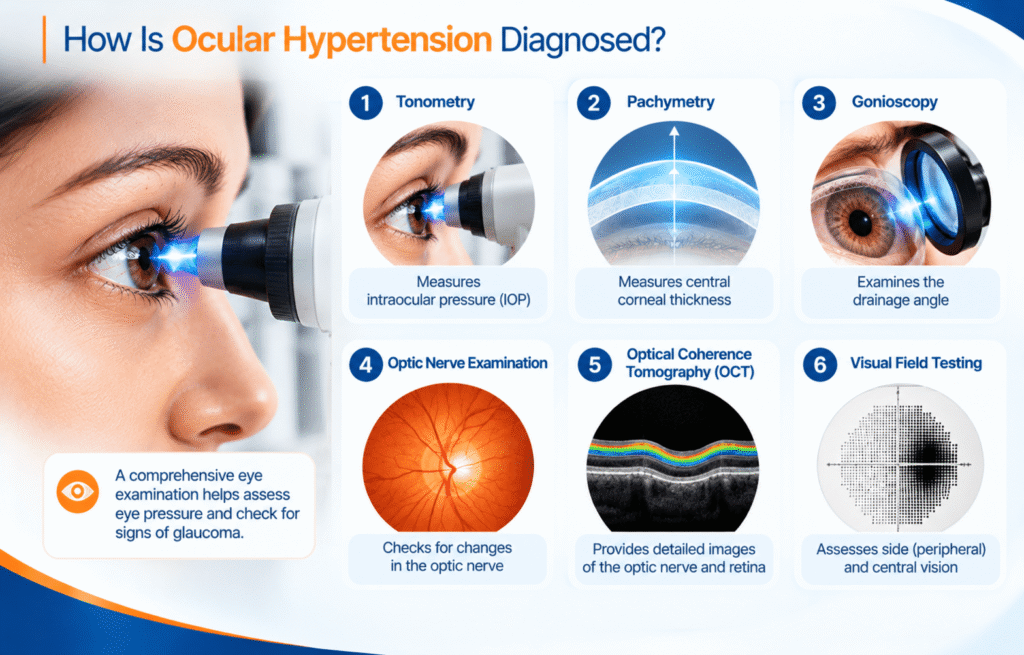
Not every patient requires every test. The recommended assessment depends on the initial findings and individual clinical needs.
Ocular Hypertension Treatment in Dubai
Ocular hypertension treatment aims to reduce the risk of optic nerve damage when the likelihood of developing glaucoma justifies intervention.
Not everyone with elevated eye pressure needs immediate treatment. An eye doctor in Dubai considers the pressure readings, corneal thickness, optic nerve appearance, age, family history and other risk factors before recommending a management plan.
Treatment and monitoring options may include:
Regular Monitoring
- People at a lower risk of developing glaucoma may be advised to attend regular eye examinations rather than start treatment immediately.
- Follow-up may include repeat pressure measurements, optic nerve examinations and other tests when clinically appropriate. Keeping these appointments helps identify changes that may require treatment.
Prescription Eye Drops
- Pressure-lowering eye drops may be prescribed when the risk of developing glaucoma warrants treatment.
- Different medicines work in different ways. Some reduce the production of aqueous humour, while others help improve its drainage. The choice of medication depends on the patient’s clinical needs and how well the treatment is tolerated.
- Use prescribed eye drops as directed, and do not change or stop treatment without medical advice.
Selective Laser Trabeculoplasty (SLT)
- Selective laser trabeculoplasty (SLT) is a laser procedure that helps improve fluid drainage through the eye’s natural drainage system. It may be considered in selected patients when lowering eye pressure is necessary.
- Whether SLT is appropriate depends on the drainage angle, eye examination findings and the ophthalmologist’s assessment.
Ocular Hypertension Assessment at Vasan Eye in Dubai
If you have been told that your eye pressure is high, an eye examination can help clarify what the result means for your vision and future eye health.
At Vasan Eye & Multispeciality Day Surgical Centre in Al Karama, Dubai, you can discuss your pressure readings, relevant medical history and previous eye test results with an eye specialist. The assessment and any additional tests recommended will depend on your clinical needs.
The important question is not simply whether your eye pressure is high, but whether it places you at risk of optic nerve damage and what follow-up or treatment is appropriate.
Location: Zabeel Plaza, Zabeel Road, Al Karama, Dubai, UAE.
When Should You See an Eye Specialist?
Arrange an eye examination if a previous test showed elevated eye pressure, you have a family history of glaucoma or your doctor has advised you to monitor your eye pressure.
Do not wait for symptoms to appear. Ocular hypertension usually does not affect how your eyes feel, and early glaucoma can also develop without obvious warning signs.
If you experience sudden eye pain, redness, blurred vision, halos around lights or a severe headache with nausea, seek urgent medical attention rather than waiting for a routine appointment.
Medical Disclaimer
This page is for general educational purposes and is not a substitute for an examination, diagnosis or personalised medical advice from a qualified eye specialist. Treatment needs and treatment choices depend on individual clinical findings.
References
- Kass MA, Heuer DK, Higginbotham EJ, et al. The Ocular Hypertension Treatment Study: A Randomised Trial Determines That Topical Ocular Hypotensive Medication Delays or Prevents the Onset of Primary Open-Angle Glaucoma. Archives of Ophthalmology.
- National Institute for Health and Care Excellence (NICE). Glaucoma: Diagnosis and Management. Guideline NG81.

Vasan Eye & Multispeciality DSC's Medical Content Team
Vasan Eye & Multispeciality DSC’s medical content team specialises in creating accurate, clear, and patient-focused healthcare content. With strong clinical understanding and expertise in technical writing and SEO, the team translates complex medical information into reliable, accessible resources that support informed decisions and uphold Vasan Eye & Multispeciality DSC’s commitment to quality care.