

Ptosis Treatment in Dubai
Ptosis, or a drooping upper eyelid, occurs when one or both upper eyelids sit lower than their normal position. Depending on its severity and cause, ptosis may affect the appearance of the eyes, interfere with the upper field of vision, or indicate an underlying muscle or nerve condition.
Common signs include one eyelid appearing lower than the other, a heavy feeling around the eyes, difficulty keeping the eyelids open, or raising the eyebrows to see more clearly.
At Vasan Eye & Multispeciality Day Surgical Center in Al Karama, Dubai, patients can enquire about an assessment for drooping eyelids and discuss appropriate management options. Ptosis treatment in Dubai depends on the cause, eyelid muscle function, examination findings, and whether vision is affected.
If you have noticed persistent or worsening eyelid drooping, arrange an eye examination to understand the cause and determine the appropriate next steps.
What Is Ptosis?
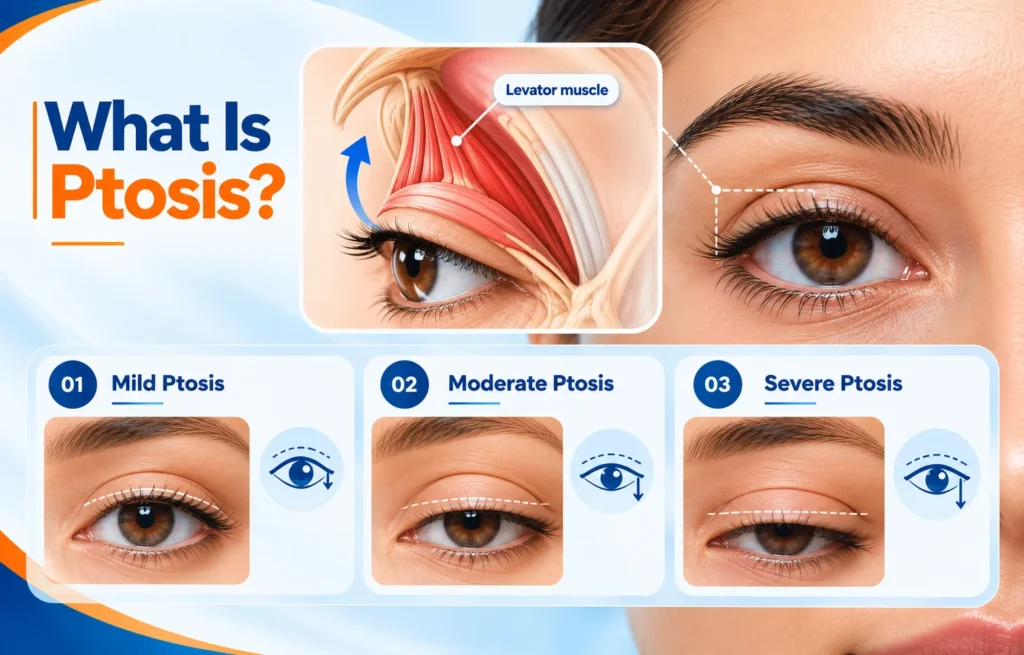
Ptosis is the medical term for a drooping upper eyelid, also known as blepharoptosis. It can affect one or both eyes and may develop when the muscles, connective tissues, or nerves responsible for lifting the eyelid are affected.
The severity of ptosis varies:
- Mild ptosis: Slight eyelid drooping, mainly affecting appearance.
- Moderate ptosis: Noticeable drooping that may cause heaviness or affect daily activities.
- Severe ptosis: The eyelid may cover part of the pupil and obstruct vision.
Ptosis should be distinguished from excess upper eyelid skin, a low eyebrow, or swelling, as these conditions may require different treatments.
What Causes Ptosis?
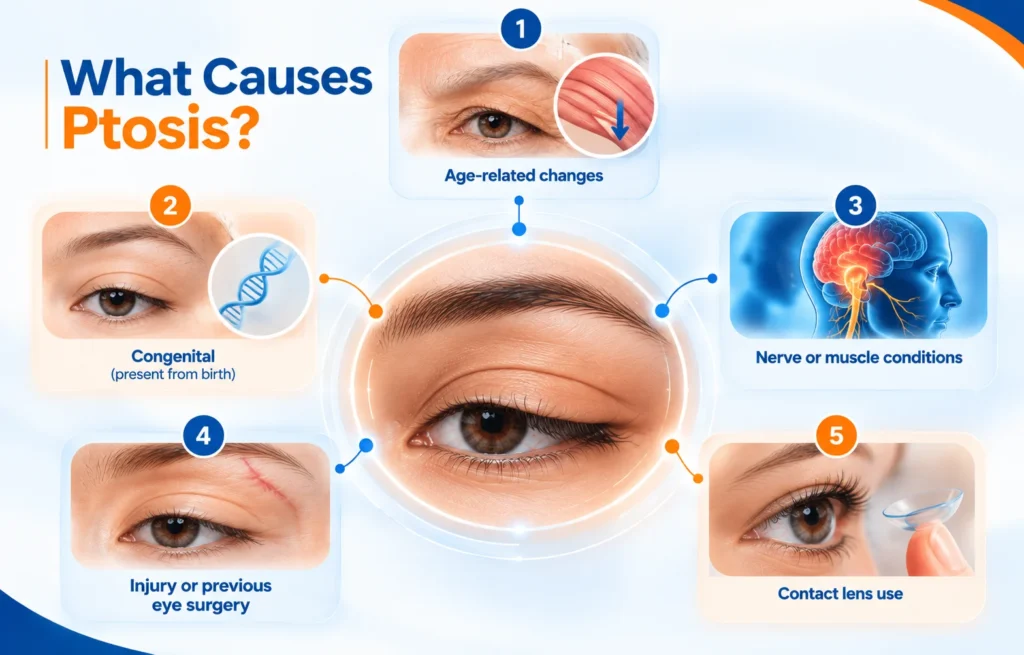
The causes of ptosis depend on when the condition develops and which structures are affected. Some people are born with drooping eyelids, while others develop the condition later in life.
1. Age-Related Ptosis
Age-related ptosis is a common cause of drooping eyelids in adults. Over time, the muscle or tendon responsible for lifting the upper eyelid may stretch or weaken, causing the eyelid to sit lower than before.
The change may develop gradually and affect one eye more than the other.
2. Congenital Ptosis
Congenital ptosis is present at birth and usually occurs because the levator muscle, which lifts the upper eyelid, has not developed properly.
Congenital ptosis may affect one or both eyes. Children with significant eyelid drooping need an early eye assessment because the condition can interfere with normal visual development.
3. Muscle and Nerve Conditions
Certain medical conditions can affect the muscles or nerves that control eyelid movement. These include myasthenia gravis and Horner syndrome, among other neurological conditions.
Ptosis associated with a nerve or muscle disorder may occur with other symptoms, such as double vision, changes in pupil size, or muscle weakness. The underlying cause needs to be evaluated before treatment is decided.
4. Injury or Previous Eye Surgery
An injury to the eyelid or surrounding area, or previous eye surgery, may affect the muscle or connective tissue responsible for keeping the eyelid raised.
The resulting drooping may develop immediately or become noticeable later.
5. Ptosis After Botox
Eyelid ptosis is a recognised possible complication of botulinum toxin injections, including Botox. It may occur if the effects of the injection involve muscles that influence eyelid position.
If your eyelid begins drooping after Botox treatment, consult your treating clinician or an eye specialist. Do not use eye drops or other treatments without professional advice.
6. Contact Lens Use
Long-term contact lens use, particularly when associated with repeated manipulation of the eyelids, may contribute to changes in the tissues supporting the upper eyelid in some people.
An eye examination can help determine whether these changes are contributing to the drooping.
Reach Out for Expert Care
What Are the Symptoms of Ptosis?
The symptoms of ptosis depend on how far the eyelid droops and whether the condition affects vision.
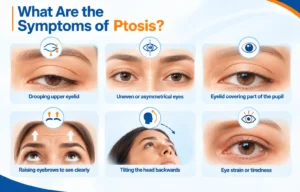
Common ptosis symptoms include:
- One eyelid appearing lower than the other.
- Both upper eyelids drooping.
- The eyes looking uneven or asymmetrical.
- A heavy feeling around the upper eyelids.
- The upper eyelid covering part of the pupil.
- Difficulty seeing clearly in the upper field of vision.
- Raising the eyebrows to keep the eyes open.
- Tilting the head backwards to improve vision.
- Eye strain or tiredness when trying to keep the eyelids raised.
Some people initially notice that their left eye is getting smaller or that the right eye looks bigger than the left. These changes do not necessarily mean that the eyeball itself has changed size. Differences in eyelid position can create this appearance.
However, a new or sudden difference in eye appearance should not automatically be attributed to ptosis. Other eye and neurological conditions may cause similar changes.
What Are the Different Types of Ptosis?
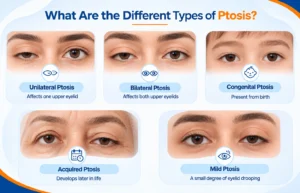
Ptosis can be classified according to when it develops, the number of eyelids affected, and its underlying cause.
- Unilateral ptosis: Affects one upper eyelid and may make the eyes look uneven.
- Bilateral ptosis: Affects both upper eyelids. The drooping may be similar on both sides or more pronounced in one eye.
- Congenital ptosis: Is present from birth and is often associated with abnormal development of the eyelid-lifting muscle.
- Acquired ptosis: Develops later in life and may be associated with ageing, injury, previous surgery, or a medical condition.
- Mild ptosis: Describes a small degree of eyelid drooping that may not obstruct vision but still warrants assessment if new or unexplained.
The type and severity of ptosis help an eye specialist determine the appropriate management.
How Is Ptosis Diagnosed?
The first step in ptosis treatment in Dubai is identifying why the eyelid is drooping. An eye specialist will assess eyelid position, muscle function, vision, and other findings that may indicate an underlying condition.
The examination may include the following:
Medical History
Your specialist may ask when the drooping started, whether it affects one or both eyes, whether it changes during the day, and whether you have other symptoms.
Information about previous eye surgery, injuries, contact lens use, Botox injections, medical conditions, and medications may also be relevant.
Eyelid and Eye Examination
The specialist may assess eyelid height, the function of the levator muscle, pupil size, eye movements, and the surrounding eyelid structures.
These findings help distinguish ptosis from excess eyelid skin or other conditions that can create a similar appearance.
Vision and Visual Field Testing
If the eyelid droops over the pupil or interferes with daily activities, visual acuity and visual field testing may help assess the effect on vision.
Additional Investigations
If the examination suggests a neurological or muscular cause, additional investigations may be recommended. These depend on the suspected condition and can include blood tests or imaging.
Not every patient requires all these tests. The assessment is tailored to the symptoms and clinical findings.
What Is the Treatment for Ptosis?
Ptosis treatment in Dubai depends on the cause, severity, and effect on vision. Some patients may need monitoring, while others may benefit from treatment of an underlying condition, selected prescription eye drops, or ptosis correction surgery.
There is no single treatment that is suitable for every type of drooping eyelid.
1. Monitoring Mild Ptosis
If ptosis is mild, stable, and does not interfere with vision, an eye specialist may recommend observation and follow-up.
Monitoring may be appropriate when the examination does not indicate an urgent underlying problem. New, progressive, or unexplained eyelid drooping requires assessment rather than simply waiting for it to improve.
2. Treating the Underlying Cause
When ptosis is associated with a muscle, nerve, or other medical condition, treatment may focus on the underlying problem.
Improvement in eyelid position depends on the cause and the response to treatment. Treating the underlying condition does not guarantee that the drooping will completely resolve.
3. Prescription Eye Drops
Certain prescription eye drops may temporarily improve upper eyelid elevation in selected adults with acquired ptosis.
These medications are not suitable for all types of ptosis and do not replace an examination to identify the cause. Your eye specialist can explain whether this option is appropriate for your condition.
4. Ptosis Correction Surgery
Ptosis surgery may be considered when the drooping interferes with vision, affects daily activities, or warrants correction following an eye specialist’s assessment.
The procedure aims to raise the upper eyelid to an appropriate position. The choice of technique depends on the severity of ptosis, levator muscle function, eyelid anatomy, and other clinical findings.
Vasan Eye lists ptosis surgery under its Oculoplasty Services in Dubai. You can also read more about oculoplastic and reconstructive eye surgery.
Your specialist can explain which approach, if any, may be suitable for your condition.
Reach Out for Expert Care
Is Ptosis Surgery Safe?
Ptosis surgery is an established procedure for correcting drooping upper eyelids, but, like any surgery, it carries risks. Its suitability and expected outcome depend on the patient’s eye health, the cause of ptosis, and the surgical technique.
Possible complications include:
- Swelling and bruising.
- Temporary irritation or dry eyes.
- Uneven eyelid height or appearance.
- Under-correction, where the eyelid remains too low.
- Over-correction, where the eyelid is raised too high.
- Difficulty closing the eyelid completely.
- Exposure-related eye irritation.
- Infection or bleeding.
- Recurrence of eyelid drooping.
Your specialist will assess these risks in relation to your condition and explain the precautions and follow-up care required.
The aim of treatment is to improve eyelid position while protecting the eye’s surface and function. A particular cosmetic or visual result cannot be guaranteed.
What Is the Recovery Time After Ptosis Surgery?
Ptosis surgery recovery varies depending on the technique used, the extent of correction, and individual healing.
Swelling and bruising are common during the early recovery period. The eyelid position may also change as the tissues heal, which is why follow-up appointments are important.
After surgery, your surgeon may advise you to:
- Follow the prescribed medication and eye care instructions.
- Avoid rubbing or applying pressure to the operated eyelid.
- Limit strenuous activity for the recommended period.
- Attend follow-up appointments to assess healing and eyelid position.
- Seek prompt advice if you experience increasing pain, worsening redness, discharge, difficulty closing the eye, or a change in vision.
Your surgeon will provide specific instructions based on the procedure performed.
Can Ptosis Go Away on Its Own?
Ptosis does not always go away without treatment. Whether it improves depends on the underlying cause.
Some temporary cases may improve as the triggering factor resolves. However, ptosis caused by age-related stretching of the eyelid tissues or congenital muscle abnormalities may persist.
Ptosis caused by an underlying medical condition may improve if that condition is successfully treated, but the eyelid position may not return to normal in every case.
If the drooping is new, worsening, or affecting your vision, arrange an eye examination to identify the cause.
Sudden-onset ptosis requires urgent assessment, especially when accompanied by double vision, severe headache, eye pain, unequal pupils, weakness, or difficulty speaking. Seek emergency medical care immediately.
When Should You See an Eye Specialist for Ptosis?
Arrange an eye consultation if you notice:
- Persistent drooping of one or both upper eyelids.
- Increasing differences between the appearance of your eyes.
- An eyelid covering part of your pupil or visual field.
- Difficulty keeping your eyes open.
- A need to raise your eyebrows or tilt your head to see clearly.
- Drooping that develops after an injury, eye procedure, or Botox injection.
- Ptosis in a child, particularly if the eyelid may interfere with vision.
Children with congenital ptosis need timely assessment because significant drooping can affect visual development.
Seek emergency medical care for sudden eyelid drooping, especially when accompanied by double vision, severe headache, eye pain, unequal pupils, facial or limb weakness, or difficulty speaking. These symptoms may indicate a serious underlying condition.
Ptosis Treatment in Dubai at Vasan Eye
Drooping eyelids can have several causes, ranging from age-related changes in the eyelid tissues to congenital muscle abnormalities and certain neurological conditions. Identifying the cause is the first step in deciding whether monitoring, medical management, or ptosis correction surgery may be appropriate.
Vasan Eye & Multispeciality Day Surgical Center is located at Zabeel Plaza, Zabeel Road, Al Karama, Dubai. The clinic lists ptosis surgery under its oculoplasty services.
Patients concerned about drooping eyelids can contact the clinic to enquire about an eye assessment and the treatment options available for their condition.
Book an Eye Consultation: Contact Vasan Eye to enquire about an appointment for drooping eyelid assessment.
Explore our Oculoplasty Services to learn more about eyelid and related eye conditions.
Medical Disclaimer: This content is for informational purposes only and is not a substitute for professional medical advice, diagnosis, or treatment. Consult an eye specialist for personalised guidance.
References:
Frequently Asked Questions
What is ptosis? expand_more
Ptosis is the medical term for a drooping upper eyelid. It can affect one or both eyes and may sometimes interfere with vision.
Can ptosis go away on its own? expand_more
Some temporary cases may improve depending on the cause, but many cases persist. An eye specialist can assess the cause and recommend appropriate management.
Can Botox cause ptosis? expand_more
Yes. Eyelid drooping can occur after Botox injections. Consult your treating clinician or an eye specialist if you notice this symptom.
Is ptosis genetic? expand_more
Some forms of congenital ptosis may have a genetic component, although not all cases are inherited.
Is ptosis surgery safe? expand_more
Ptosis surgery can improve eyelid position in suitable patients, but it carries potential risks, including asymmetry, dry eyes, and difficulty closing the eyelid completely. Your surgeon can explain the risks relevant to your condition.
What is bilateral ptosis? expand_more
Bilateral ptosis means that both upper eyelids droop. The cause and appropriate management depend on the clinical findings.
Can eye drops treat ptosis? expand_more
Certain prescription eye drops may temporarily improve eyelid elevation in selected adults with acquired ptosis. They are not suitable for every type of ptosis.
Why is one of my eyelids bigger than the other? expand_more
Differences in eyelid position, excess skin, swelling, or other eye conditions can make one eye appear bigger than the other. An eye examination can help identify the cause.

Vasan Eye & Multispeciality DSC's Medical Content Team
Vasan Eye & Multispeciality DSC’s medical content team specialises in creating accurate, clear, and patient-focused healthcare content. With strong clinical understanding and expertise in technical writing and SEO, the team translates complex medical information into reliable, accessible resources that support informed decisions and uphold Vasan Eye & Multispeciality DSC’s commitment to quality care.