

Ocular Melanoma Treatment in Dubai
Eye cancers are rare, accounting for less than 0.5% of all cancer cases worldwide. Eye Cancer Treatment in Dubai has become a preferred destination for many who need specialised treatment for ocular melanoma, an uncommon type of eye cancer that makes up only a tiny percentage of all cancer cases around the world.
Ocular melanoma is the most prevalent type of primary eye cancer in adults and may lead to visual loss and poor general well-being. Timely detection is imperative because the early signs of eye cancer usually appear when the disease has advanced.
Vasan Eye & Multispeciality DSC utilises the latest diagnostic equipment to ensure successful treatment and vision preservation.
What is Ocular Melanoma?
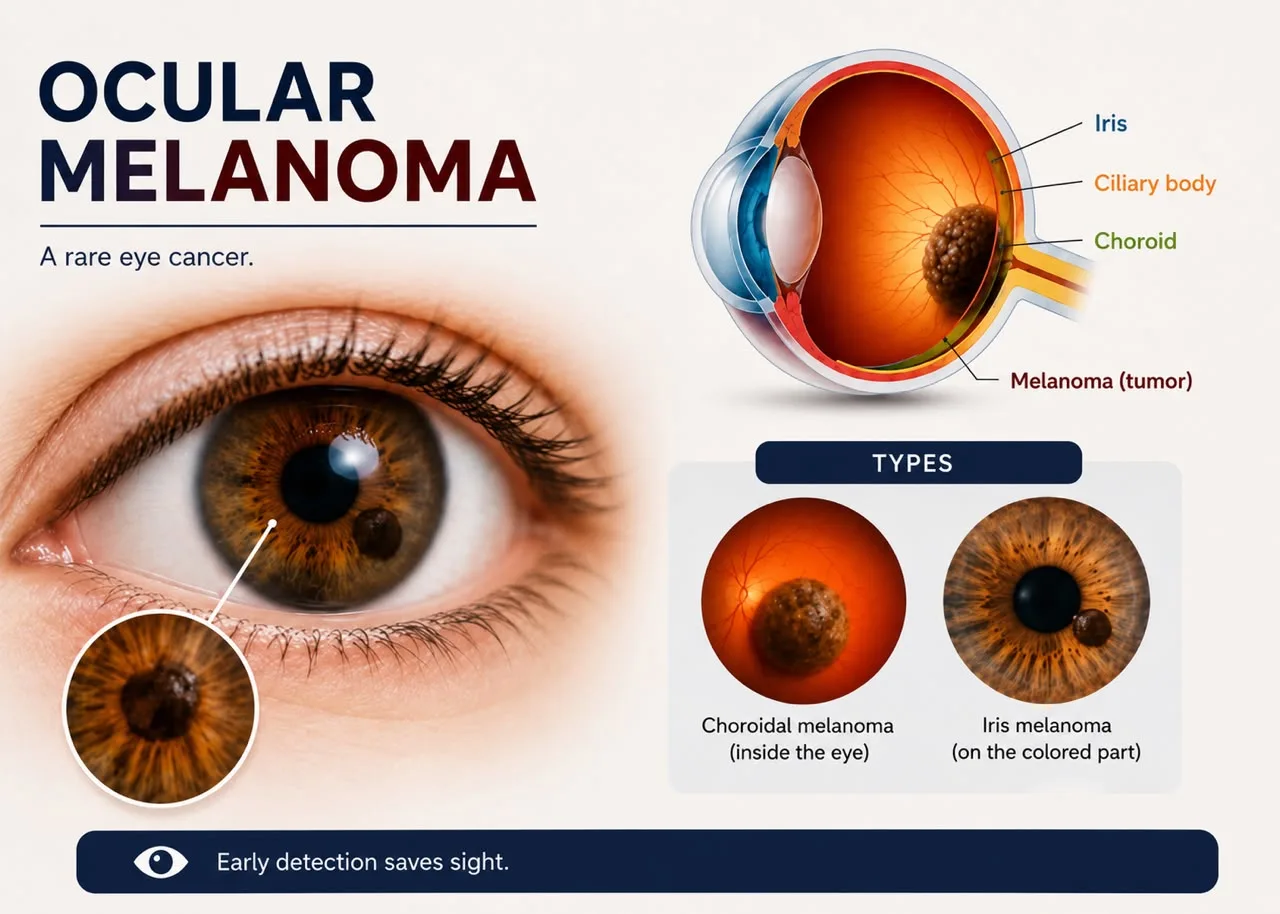
Eye melanoma, also known as ocular melanoma or uveal melanoma, is an uncommon yet very serious form of eye cancer. Eye melanoma starts with the formation of tumours inside the eye. Melanocytes are the cells that manufacture pigment called melanin. Melanin is responsible for the colour of the skin, hair, and eyes. It undergoes mutation and becomes abnormal, causing eye melanoma.
In most cases, ocular melanoma begins in the uvea, which is the middle section of the eye made up of the iris, ciliary body, and choroid. Since tumours often begin in areas that cannot be seen when using a mirror, there will be no way to know if one already suffers from this cancer at its early stages. This disease, in fact, shows very few or even no symptoms, so it will only be discovered through a regular eye test.
Symptoms Associated with Ocular Melanoma
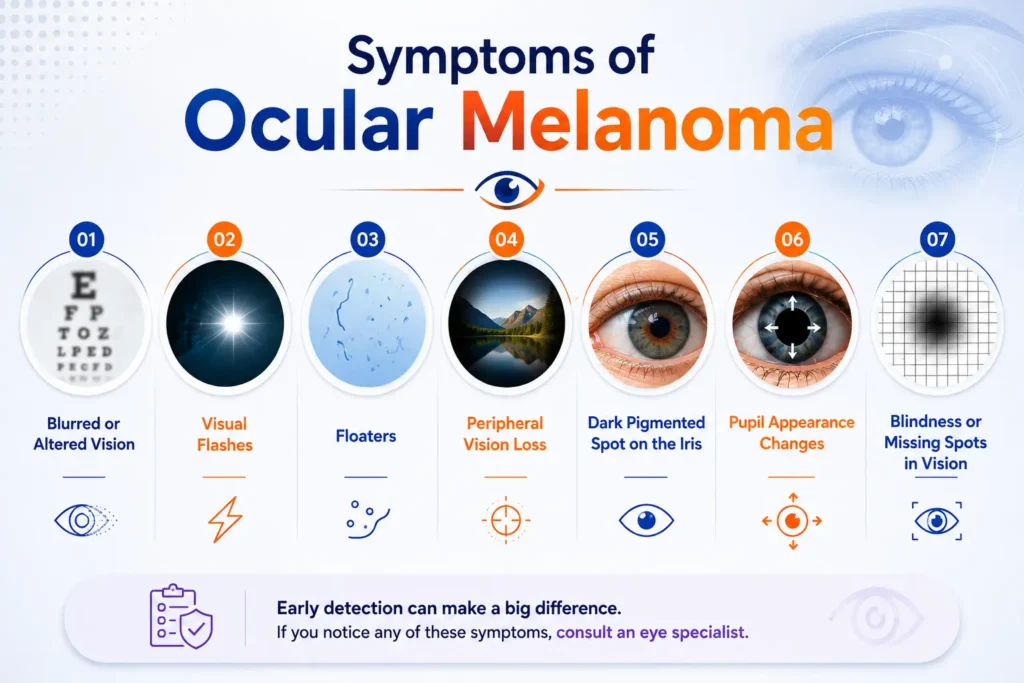
In earlier stages, ocular melanoma is difficult to diagnose due to a lack of symptoms. However, in later stages, many eye cancer symptoms can be experienced by the patient:
- Blurred or Altered Vision: Objects can be seen blurry, distorted, or not clear since the tumour is causing the problem in the retina or other parts of the eye.
- Visual Flashes: Some people might see quick flashes of light, particularly those that occur at the periphery of vision.
- Floaters: Specks, spots, and lines can appear in the field of sight because of changes happening within the eyes.
- Peripheral Vision Loss: The tumour will affect the side vision since it is hard to see anything outside the centre.
- Dark Pigmented Spot on the Iris: There will be a development of dark pigmentation in the iris area due to the growth of ocular melanoma.
- Pupil Appearance Changes: The shape or the size of the pupil can be altered since ocular melanoma changes its appearance.
- Blindness or Missing Spots in Vision: Individuals will suffer from loss or blind spots in their vision.
It is very important to carefully assess these symptoms and seek an appointment with a doctor for an early diagnosis and comprehensive treatment of the condition.
Reach Out for Expert Care
What Are The Risks and Causes Of Ocular Melanoma?
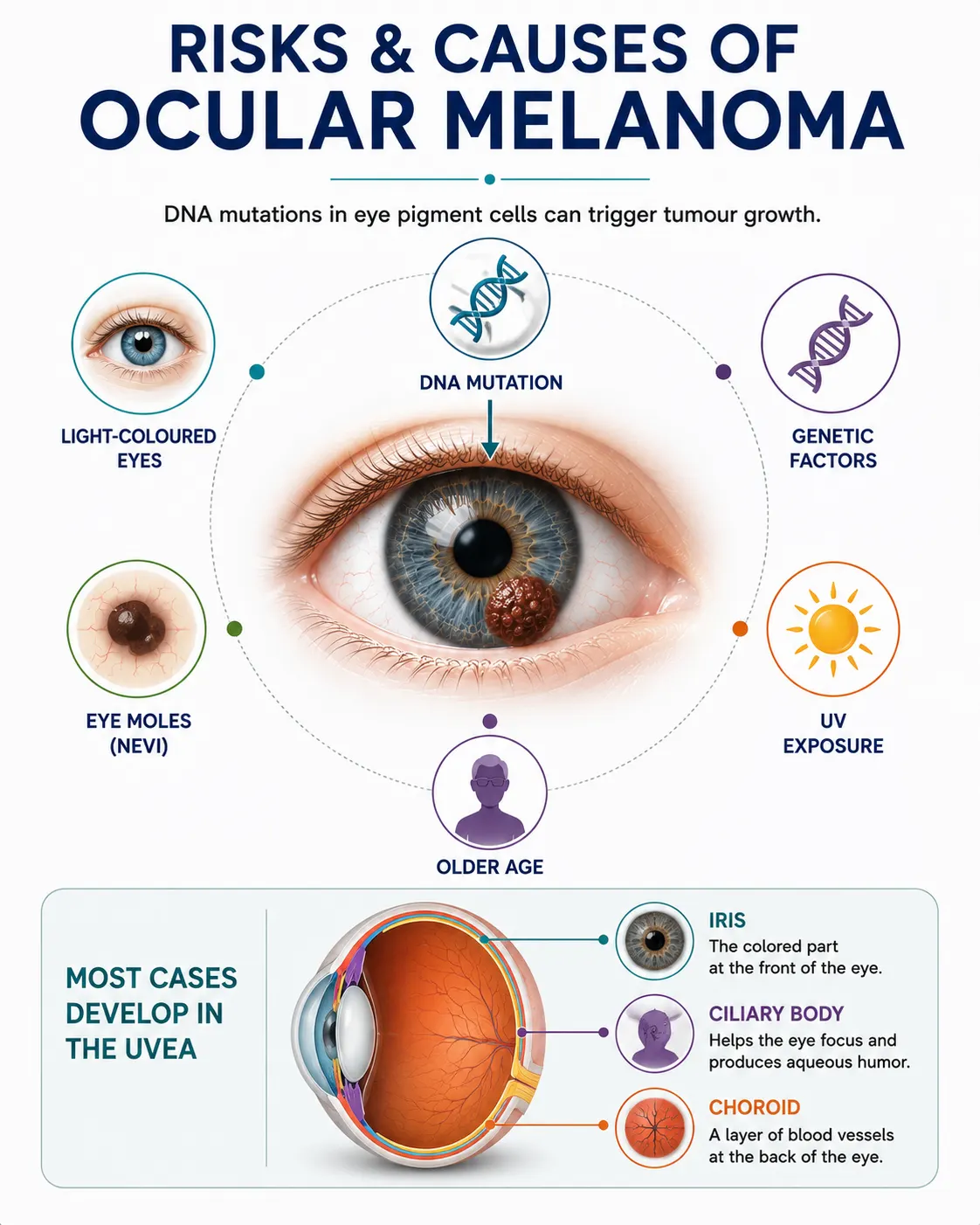
The cause has not been determined yet, but studies have shown that Ocular melanoma occurs as a result of a DNA mutation in pigmented cells within the eye.
DNA is the genetic material that is responsible for controlling cell growth, division, and death. In this case, the DNA mutation leads to the proliferation of cells in an uncontrolled manner. This results in tumour formation due to the accumulation of the mutated cells, which can affect the surrounding eye tissue. In severe cases, the cancerous cells metastasise to other regions of the body.
The following factors may predispose an individual to developing ocular melanoma:
- Eye Colour: Individuals with blue, green, or grey eye colours have a higher possibility of getting ocular melanoma compared to individuals with darker eye colours.
- Eye Moles or Eye Nevi: The presence of eye moles or any other pigmented spots in the eye may lead to the development of melanoma in the future.
- Fair Skin Colour: People with fair skin complexion are at high risk of developing both ocular and non-ocular melanomas.
- Older Age: Risk for developing ocular melanoma increases with age; older adults have a high chance of developing the disease.
- Genetic Disorders and Abnormal Gene Mutations: Some hereditary skin disorders or gene mutations may predispose someone to develop the disease.
- Abnormal Eye Pigment: Abnormal pigment in the eye leads to an increased risk of developing ocular melanoma.
- Exposure to UV for Long Periods of Time: Sunlight and other sources of ultraviolet radiation, such as those from tanning beds, could be implicated in some instances, especially in cases of conjunctival melanoma.
The majority of eye melanomas arise in the uveal tract, comprising the iris, ciliary body, and choroid. It is also possible for melanomas to arise in the conjunctiva, lid, or other structures that make up the eye socket.
Diagnosis For An Effective Ocular Melanoma Treatment
Ocular melanoma is a rare form of eye cancer that can be difficult to detect in its early stages because it may not cause noticeable symptoms. As a result, many cases are identified during routine eye examinations. Early diagnosis is essential for timely eye cancer treatment and to reduce the risk of the disease spreading to other parts of the body.
- Complete Eye Examination: A complete eye examination will help in identifying any abnormal pigmentation, tumour growths, or abnormalities that may suggest the development of eye cancer.
- Dilated Eye Examination: Pupils will be dilated with eye drops to enable the specialist to observe the inner parts of the eye, such as the retina and choroid, where ocular melanoma normally develops.
- Ocular Ultrasound: The ocular ultrasound utilises sound waves to generate images of the inner eye. These images help specialists get information on the size, location, and nature of the tumour.
- Optical Coherence Tomography (OCT): This procedure involves the generation of high-definition images of the retinal area and surrounding tissue. Specialists obtain data on possible damage to the eyes from the tumour.
- Fluorescein Angiography: Specialists inject a unique dye to help visualise the blood vessels in the eye. This process may help identify any abnormalities in the blood vessel pattern that can indicate eye cancer.
- CT Scan or MRI Scan: These are specialised imaging procedures that help establish the severity of the tumour and whether there are signs of spreading of the eye cancer outside the eye.
- Biopsy (Selected Cases): In some cases, specialists may perform a biopsy where they collect a small tissue sample to analyse the condition of the patient.
If the above diagnostic procedures confirm the presence of eye cancer, more tests will be necessary to determine its stage and the suitable treatment method.
How is Ocular Melanoma Treated?
Eye melanoma treatment is influenced by various elements such as tumour size and location, stage of the disease, whether it has metastasised, and overall eye condition. The main aim during the treatment of eye cancer is to get rid of the tumour while maintaining complete vision.
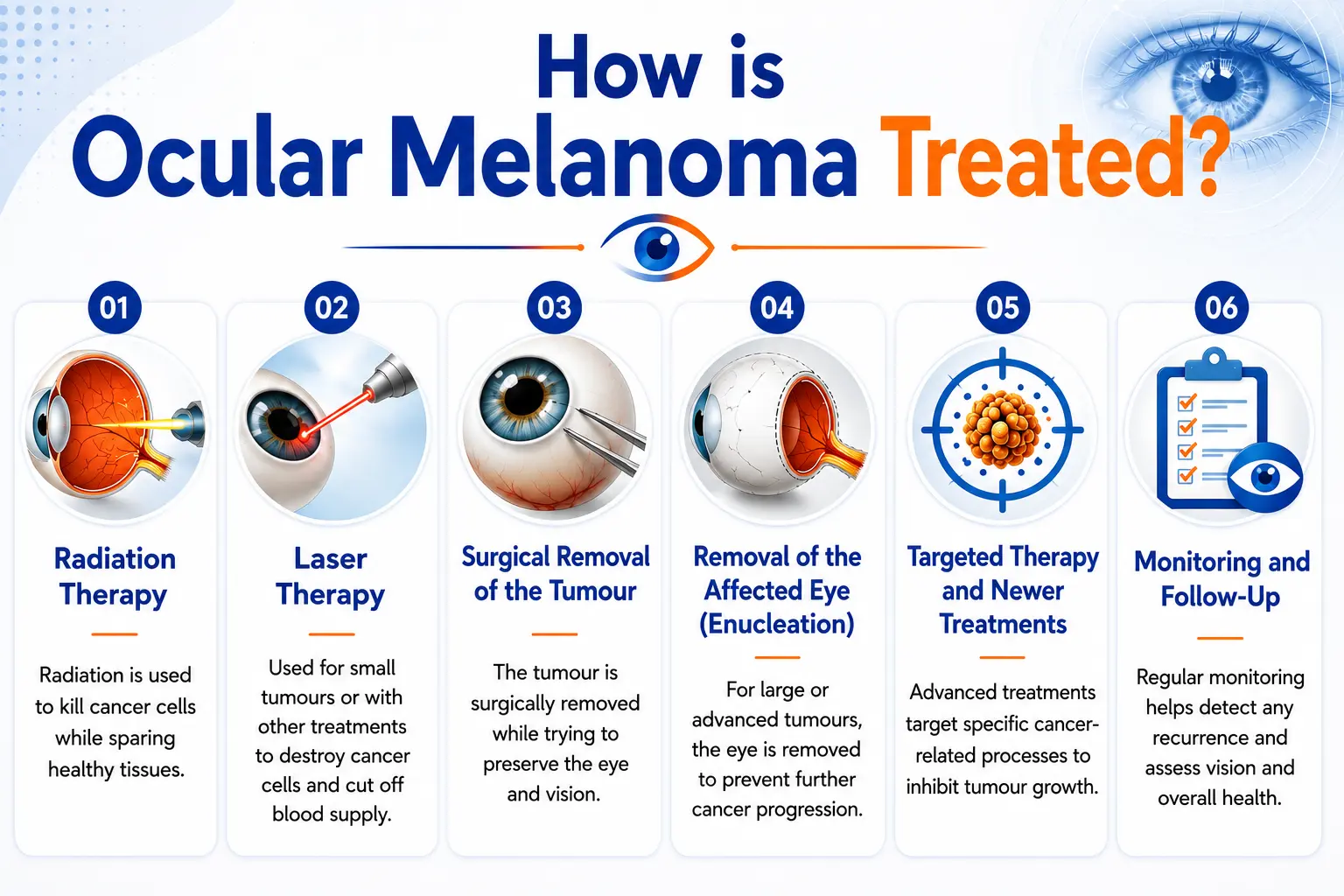
- Radiation Therapy: Radiation therapy is widely used for treating ocular melanoma. This treatment entails delivering radiation to kill cancer cells without affecting nearby healthy tissues.
- Laser Therapy: Laser therapy may be applied in case of small tumours or in conjunction with other treatment methods. It consists of killing cancer cells as well as cutting off the blood supply of the tumour.
- Surgical Removal of the Tumour: Sometimes, it becomes possible to surgically remove the tumour from the eye and save the eye. The surgery will depend on the characteristics of the tumour in question.
- Removal of the Affected Eye (Enucleation): If there is a large tumour or an advanced stage at which saving eyesight is no longer possible, then enucleation will help avoid further cancer progression.
- Targeted Therapy and Newer Treatments: Scientists conduct studies that will help find targeted treatments to inhibit certain cancer-related processes and thus prevent tumour expansion.
- Monitoring and Follow-Up: Monitoring after undergoing treatment is necessary for checking whether cancer has recurred and assessing the state of patients’ vision and other aspects.
Early detection and treatment of eye cancer increase the chances of a better outcome and help to preserve both vision and the general well-being of the person.
Vasan Eye for Ocular Melanoma Treatment in Dubai
Selecting the best eye clinic in Dubai is vital for ensuring positive results in cases of this eye cancer. Patients will be provided with a full range of services aimed at diagnosing and treating eye cancer at Vasan Eye & Multispeciality. Here is why patients choose it:
- Access to Advanced Treatment in Dubai: Dubai is considered an excellent place for eye cancer treatment due to its modern healthcare system, innovative technologies, highly qualified eye specialists, and comfortable healthcare environment.
- Professional Team of Eye Specialists: The team of the best ophthalmologists in Dubai at Vasan Eye has years of experience in diagnosing and treating patients suffering from eye melanoma and other types of eye diseases.
- Up-to-Date Imaging Technologies: The state-of-the-art equipment and technology at Vasan Eye can help diagnose and determine the stage of ocular melanoma at an early stage.
- Tailored Treatment Programs: A personalised approach is taken to develop an individualised treatment program based on the disease’s size, location, and stage.
- Professional Treatment: The specialists will provide you with high-quality, professional assistance in diagnosing and treating your eye cancer.
Vasan Eye & Multispeciality DSC guarantees to provide excellent eye cancer treatment for melanoma in Dubai.
Reach Out for Expert Care
Frequently Asked Questions (FAQs)
Is eye melanoma treatment painful?
Most treatments for ocular melanoma involve anaesthesia, either local or general, to keep the patient comfortable throughout the process. Mild irritation and some vision changes may be experienced during recovery, depending on the chosen treatment method.
What is the average eye cancer treatment cost in Dubai?
The cost of eye cancer treatment depends greatly on the specific method used, the size of the tumour, hospital infrastructure, the skills of the specialist who will be treating you, and other factors. A consultation with the specialist is advised for an approximate cost of treatment. However, the standard prices generally start from AED 2,500 (approx. $680).
How serious is melanoma of the eye?
Melanoma of the eye is a dangerous kind of eye cancer that can lead to loss of vision and may even start to spread to other areas of the body, which is why early diagnosis is key to protecting oneself from the adverse effects of the condition.
What are the stages of eye melanoma?
Eye melanoma is staged based on how big the tumour is, where it’s located, and whether it has metastasised to other organs of the body. There are a few stages in between the extremes of a localised tumour in the eye and an already metastasised cancer.
Can eye melanoma be removed?
Yes. Ocular melanoma can be treated by surgical excision of the tumour, depending on its size and location, or by radiation therapy and laser therapy. In cases when the tumour is more severe, the eye might even be surgically removed.
What are the first signs of eye melanoma?
This eye cancer may present with initial symptoms such as blurred vision, seeing flashes of light, floaters, loss of peripheral vision, appearance of a new dark spot on the iris, or distortion of the shape of the pupil. Some people, however, may not experience any symptoms initially.

Vasan Eye & Multispeciality DSC's Medical Content Team
Vasan Eye & Multispeciality DSC’s medical content team specialises in creating accurate, clear, and patient-focused healthcare content. With strong clinical understanding and expertise in technical writing and SEO, the team translates complex medical information into reliable, accessible resources that support informed decisions and uphold Vasan Eye & Multispeciality DSC’s commitment to quality care.