

Retinal Detachment Treatment in Dubai
Retinal detachment is a serious eye condition that requires prompt treatment to protect vision. Retinal detachment treatment in Dubai aims to reattach the retina and prevent further vision loss.
Retinal diseases are a major contributor to the global burden of blindness, affecting at least 2.2 billion people, with most cases occurring in those over 50. The World Health Organization highlights the importance of timely, long-term eye care to prevent avoidable vision loss.
Vasan Eye & Multispeciality DSC Dubai provides comprehensive retinal care, from detailed diagnosis and specialist evaluation to personalised treatment and post-surgery follow-up.
What is Retinal Detachment?
Retinal detachment is a serious eye condition in which the retina separates from the tissues supporting it at the back of the eye. The retina is a light-sensitive layer that sends visual signals to the brain. When it becomes detached, it cannot function normally, and vision can be affected.
The condition can develop when a tear or hole allows fluid to collect behind the retina, causing it to separate from the back of the eye. Retinal detachment can also occur when the retina is pulled away by scar tissue or when fluid builds up behind it without a retinal tear.
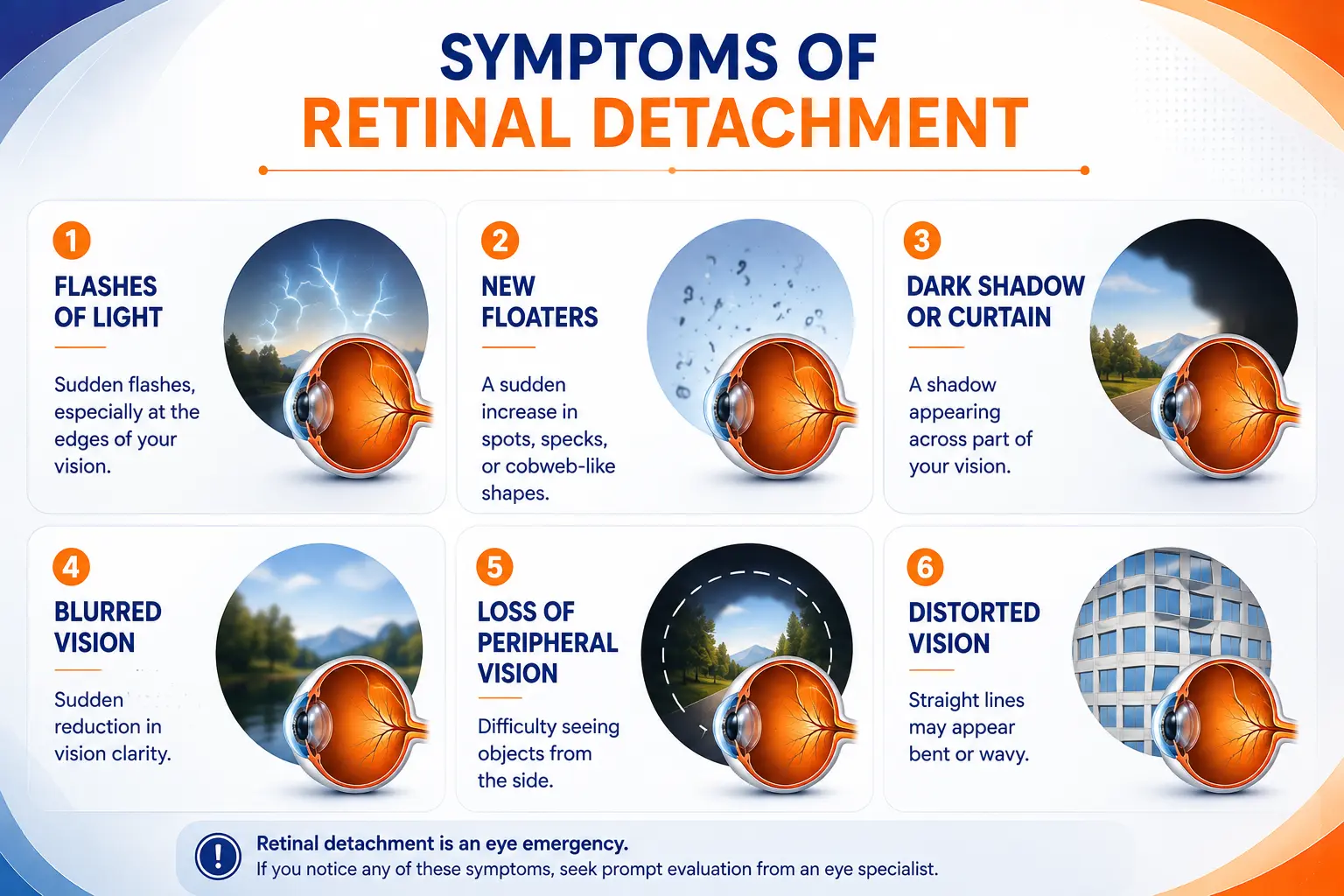
Retinal detachment may cause sudden flashes of light, a sudden increase in floaters, blurred or reduced vision, or a dark curtain or shadow across the field of vision. It is considered a medical emergency because delayed treatment can increase the risk of permanent vision loss.
What are the Symptoms of Retinal Detachment?
Reach Out for Expert Care
Retinal Detachment Treatment Options
Retinal detachment treatment aims to reattach the retina and protect as much vision as possible. The treatment recommended depends on the type, location, and extent of the detachment, as well as the presence of retinal tears or holes. Prompt treatment is important because untreated retinal detachment can lead to permanent vision loss.
Treatment options may include:
- Pneumatic retinopexy: A small gas bubble is placed inside the eye to push the retina back into position. Laser or cryopexy may then be used to seal the tear.
- Scleral buckle surgery: A silicone band is placed around the outside of the eye to support the retina and help it return to its normal position.
- Vitrectomy: The vitreous gel inside the eye is removed to relieve pulling on the retina. Air, gas or silicone oil may then be used to support it.
- Laser photocoagulation or cryopexy: These treatments can seal certain retinal tears or holes and may be used alone or alongside surgery.
Your ophthalmologist will recommend the most appropriate treatment after examining the retina and assessing the extent of the detachment.
Retinal Detachment Surgery Process: Step by Step
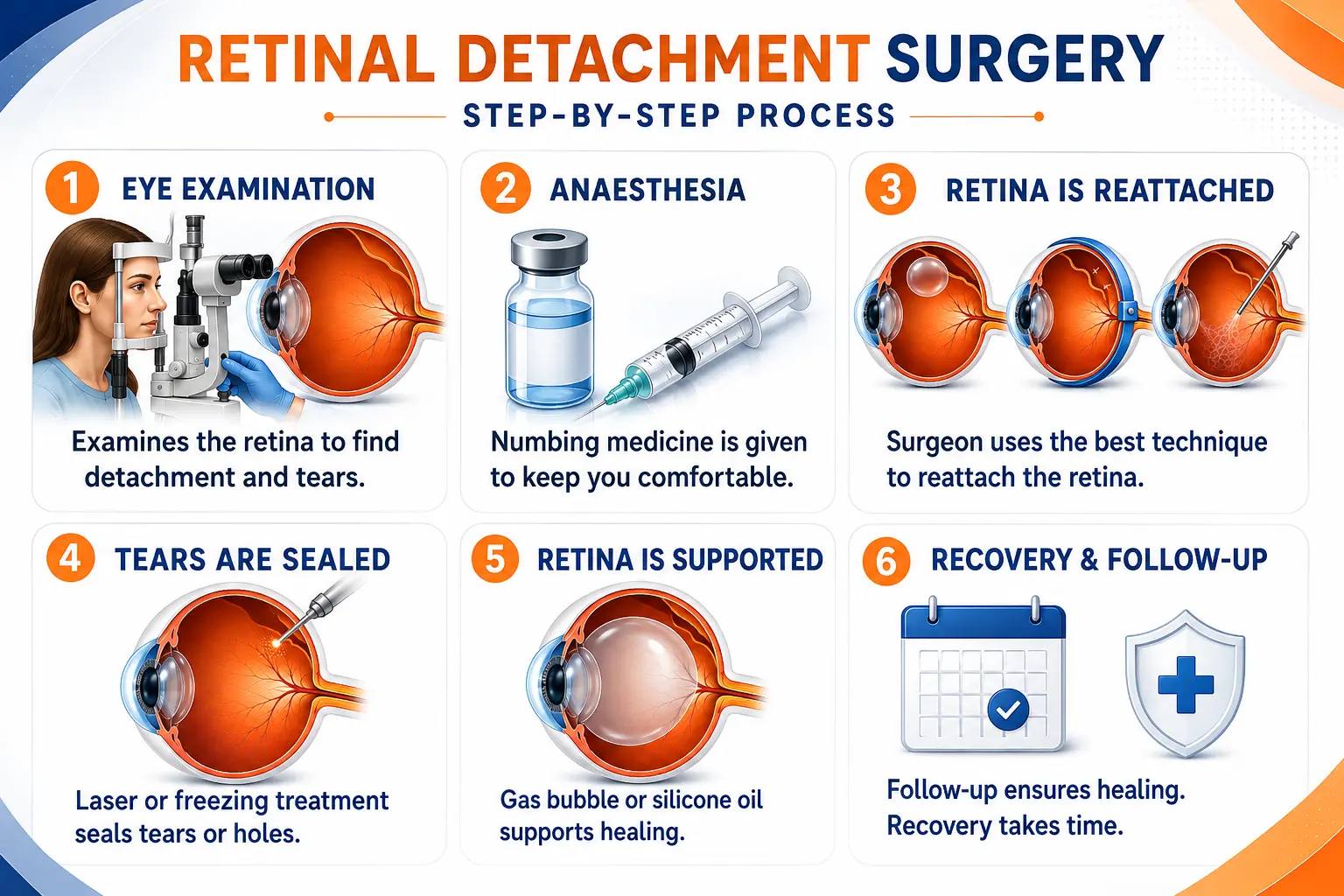
Retinal detachment surgery involves several carefully planned steps, from examining the retina to supporting its recovery. Each step is explained below in brief:
Step 1: Eye Examination
The ophthalmologist examines the retina to determine:
- Where the retina has detached
- How much of the retina is affected
- The location of any tears or holes
- Whether an ultrasound or other imaging is needed
Step 2: Anaesthesia
Numbing medicine or anaesthesia is given to keep you comfortable during the procedure. The type of anaesthesia depends on the surgery and your individual needs.
Step 3: The Retina Is Reattached
The surgeon chooses the appropriate technique based on your condition:
- Pneumatic retinopexy: A small gas bubble is placed inside the eye to push the retina back into position.
- Scleral buckle: A silicone band is placed around the outside of the eye to support the retina.
- Vitrectomy: The gel inside the eye is removed to relieve pulling on the retina. Air, gas, or silicone oil may then be used to support it.
Step 4: Retinal Tears Are Sealed
Laser treatment or freezing treatment (cryopexy) may be used around retinal tears or holes. This creates scar tissue that helps keep the retina securely attached.
Step 5: The Retina Is Supported
Depending on the procedure, a gas bubble or silicone oil may be left inside the eye to support the retina while it heals. If a gas bubble is used, you may need to keep your head in a specific position for a period of time.
Step 6: Recovery and Follow-Up
After surgery:
- Follow-up visits are needed to check healing.
- You may need to avoid heavy lifting and strenuous activities for some time.
- Air travel may be restricted while a gas bubble remains in the eye.
- Vision may take weeks or months to improve.
- Some patients may need additional treatment or surgery.
The exact recovery process varies depending on the type and severity of the retinal detachment and the treatment performed.
Recovery After Retinal Detachment Process
Recovery after retinal detachment surgery takes time, and vision may gradually improve as the eye heals. Following your surgeon’s instructions, using prescribed eye drops and attending follow-up appointments can help monitor healing and protect the treated eye.
After surgery, you may experience:
- Blurred vision: Vision may remain unclear for some time as your eye heals.
- Mild discomfort: Redness, swelling, or soreness may occur during the early recovery period.
- Eye drops: Prescribed drops may be needed to support healing and prevent infection.
- Head positioning: You may need to keep your head in a specific position if a gas bubble is used.
- Activity restrictions: Heavy lifting and strenuous activities may need to be avoided for a period of time.
- Air travel restrictions: Flying is not permitted while a gas bubble remains in the eye.
- Follow-up visits: Your ophthalmologist will check the retina and monitor your recovery.
- Gradual vision recovery: Vision may take weeks or months to improve, depending on the extent of the detachment and the treatment performed.
What are the Risks of Retinal Detachment Surgery?
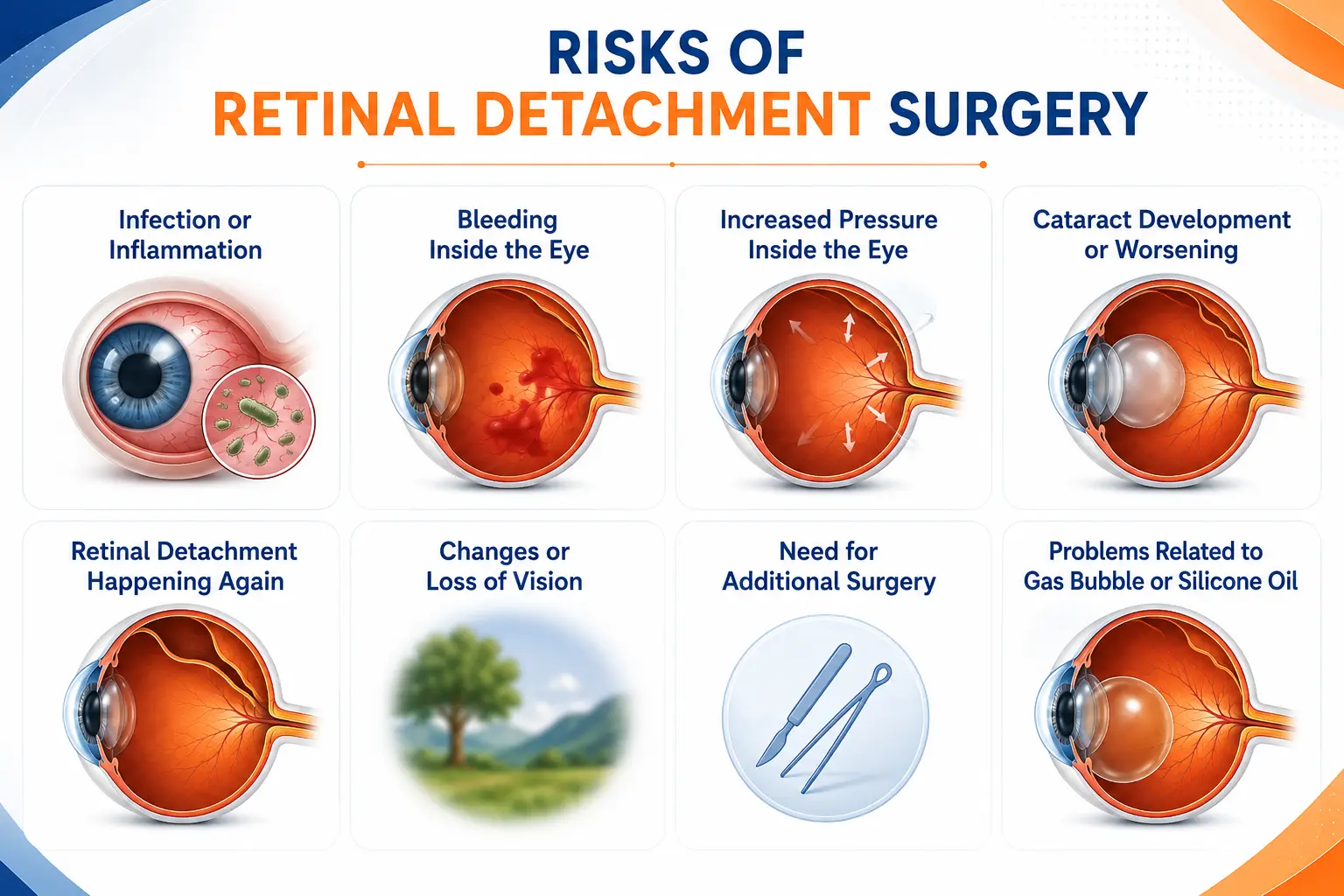
Retinal detachment surgery is generally performed to protect vision, but like any eye surgery, it can have potential risks. These may vary depending on the type of procedure, the condition of the retina, and your overall eye health.
Possible risks include:
Your eye surgeon will discuss the potential risks and benefits of the recommended procedure based on your individual condition.
Reach Out for Expert Care
Why Do Patients Choose Vasan Eye for Retinal Detachment Surgery in Dubai?
Choosing the right eye care centre is important when you need retinal detachment treatment. Vasan Eye & Multispeciality DSC, Dubai, offers comprehensive retinal care with personalised evaluation and treatment planning.
- Experienced ophthalmologists providing specialised retinal care and treatment.
- Detailed retinal evaluation to assess the location and extent of the detachment.
- Personalised treatment planning based on the condition of your retina.
- Multiple treatment options, including retinal detachment surgery and supporting procedures when required.
- Complete eye care under one roof, from diagnosis and treatment to post-surgery follow-up.
- Dedicated day surgical centre for procedures requiring surgical care.
- Insurance assistance to help make the treatment process smoother.
- Conveniently located in Al Karama, Dubai, with support for local and international patients.
Frequently Asked Questions (FAQs)
1. Can LASIK surgery cause retinal detachment?
LASIK does not directly cause retinal detachment. However, people with high myopia (severe nearsightedness) already have a higher risk of retinal detachment, whether or not they undergo LASIK. A retinal evaluation is important before refractive surgery when risk factors are present.
2. What is exudative retinal detachment?
Exudative retinal detachment occurs when fluid builds up behind the retina without a retinal tear or break. It may be associated with inflammation, leaking blood vessels, trauma, or certain eye diseases. Treatment focuses on addressing the underlying cause.
3. How to prevent retinal detachment?
Not all retinal detachments can be prevented, but regular dilated eye examinations, prompt treatment of retinal tears, and protective eyewear during high-risk activities can help reduce the risk. People with high myopia or previous retinal problems may need closer monitoring.
4. What is the cost of retinal detachment surgery in Dubai?
The retinal detachment surgery cost in Dubai varies depending on the type and severity of detachment, surgical technique, diagnostic tests, and individual treatment needs. A retina specialist can provide a personalised estimate after examination.
5. What is a serious retinal detachment?
Any retinal detachment is considered serious and requires urgent medical attention because untreated detachment can lead to permanent vision loss. Sudden flashes, many new floaters, or a curtain-like shadow over your vision require immediate evaluation.
6. What’s the difference between myopia and retinal detachment?
Myopia is a refractive error that causes distant objects to appear blurred. Retinal detachment occurs when the retina separates from the back of the eye. Severe myopia is also a risk factor for retinal detachment.
7. What is retinal detachment fundoscopy?
Fundoscopy is an examination in which an eye specialist examines the retina and back of the eye, usually after dilating the pupils. Indirect ophthalmoscopy can help identify retinal tears and determine the extent of a detachment.
8. Is retinal detachment surgery painful?
Retinal detachment is usually painless. The more typical warning signs are sudden floaters, flashes of light, blurred vision, or a dark curtain or shadow in the field of vision.
9. How to book an appointment for retinal detachment surgery at Vasan Eye Dubai?
You can book an appointment for retinal detachment surgery at Vasan Eye Dubai through the online form, phone, or WhatsApp. Mention your need for a retina consultation to ensure timely evaluation by the appropriate specialist.
10. Is retinal detachment surgery in Dubai affordable?
The affordability of retinal detachment surgery in Dubai depends on the surgical technique, complexity of the condition, investigations, and insurance coverage. Vasan Eye Dubai also provides insurance support, with costs discussed after an individual assessment.
11. Is retinal detachment treatment effective?
Yes. Retinal detachment treatment is generally effective, particularly when diagnosed and treated early. The National Eye Institute reports that treatment is ultimately successful for about 9 out of 10 people, although some patients may require additional treatment.
12. How is retinal detachment diagnosed?
Diagnosis usually involves a dilated eye examination to examine the retina. Depending on the findings, the ophthalmologist may also recommend OCT, retinal imaging, or an eye ultrasound to assess the retina more closely.
13. Is retinal detachment curable?
Retinal detachment can often be successfully repaired, but the visual outcome depends on factors such as how much of the retina is detached, whether the macula is affected, and how quickly treatment is provided. Modern retinal surgery achieves anatomical success in more than 90% of cases, although vision may not always return completely to its previous level.

Vasan Eye & Multispeciality DSC's Medical Content Team
Vasan Eye & Multispeciality DSC’s medical content team specialises in creating accurate, clear, and patient-focused healthcare content. With strong clinical understanding and expertise in technical writing and SEO, the team translates complex medical information into reliable, accessible resources that support informed decisions and uphold Vasan Eye & Multispeciality DSC’s commitment to quality care.